
Last updated September 25, 2026
ADU Cost Breakdown: The Long Beach Homeowner’s Reference for 2026
The $400-per-square-foot figure circulating in most California ADU cost guides is a construction cost only. It excludes design, engineering, permit fees, utility connections, and the site work that Long Beach’s grading and drainage standards frequently require. Together, these omitted items routinely add $40,000-$80,000 to a project. In this guide, we’ll show you the complete cost picture for every major ADU type in Long Beach, identify the hidden allowances that destroy budgets, and explain why the contracting model you choose matters more than the materials you select. For related reading, see our ADU Warning Signs: A Long Beach Homeowner’s Reference Guide.
Quick Answer
A complete ADU project in Long Beach in 2026 typically ranges from $165,000 for a garage conversion to $385,000 for a new detached unit, including all soft costs, site work, and utility connections. The final figure depends on unit type, lot conditions, and whether your contract is fixed-price design-build or cost-plus. The most commonly underestimated expenses are electrical service upgrades, soils reports for hillside lots, and the conditions of approval that Long Beach Planning attaches to coastal zone and historic district projects. See ADU Permits, Codes & Inspections in CA: What You Need to Know for a deeper look at regulatory requirements.
Table of Contents
- Hard Costs by ADU Type in Long Beach
- The Full Soft Cost Inventory
- Utility Connections and Service Upgrades
- Design-Build vs. Cost-Plus: What Each Means for Your Budget
- How to Read a Long Beach ADU Bid for Hidden Allowances
- Long Beach-Specific Variables That Move the Price
- Common Mistakes to Avoid
- When to Call a Professional
- Frequently Asked Questions
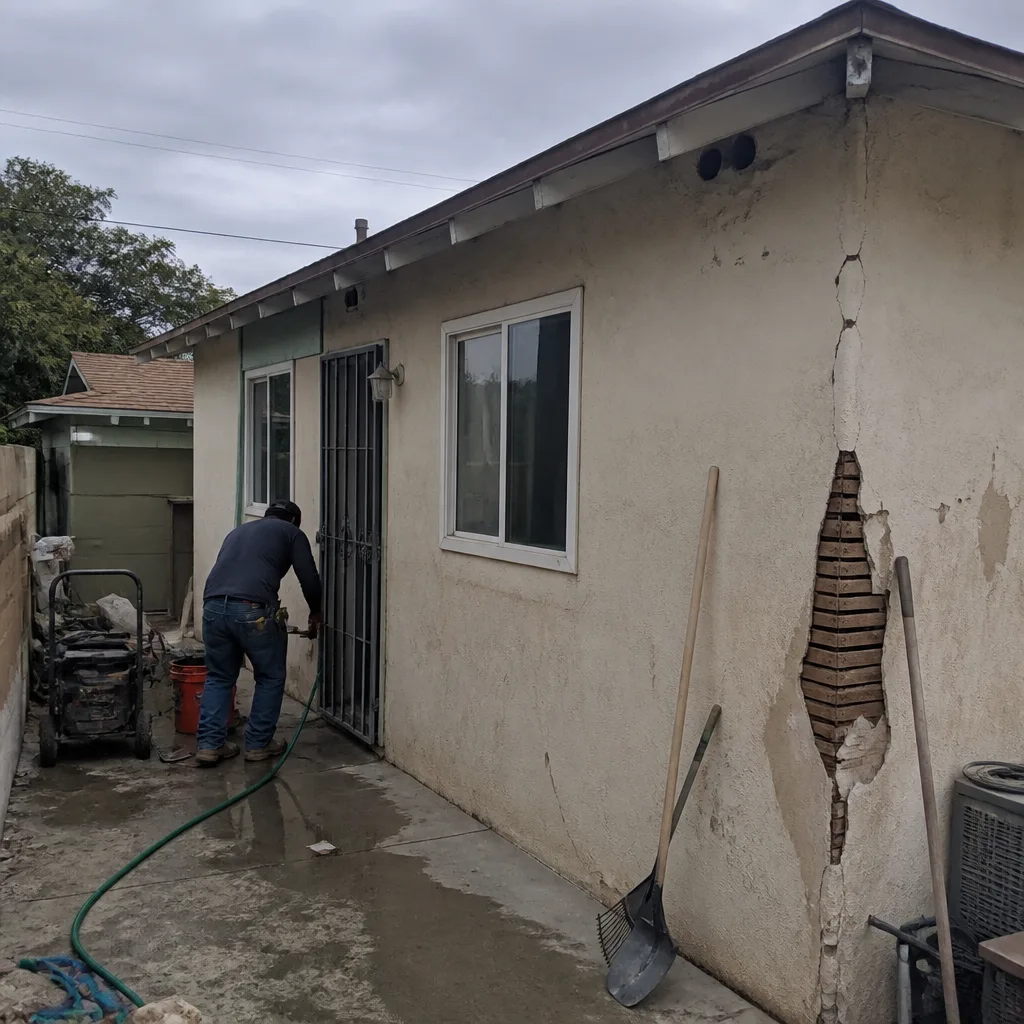 Before
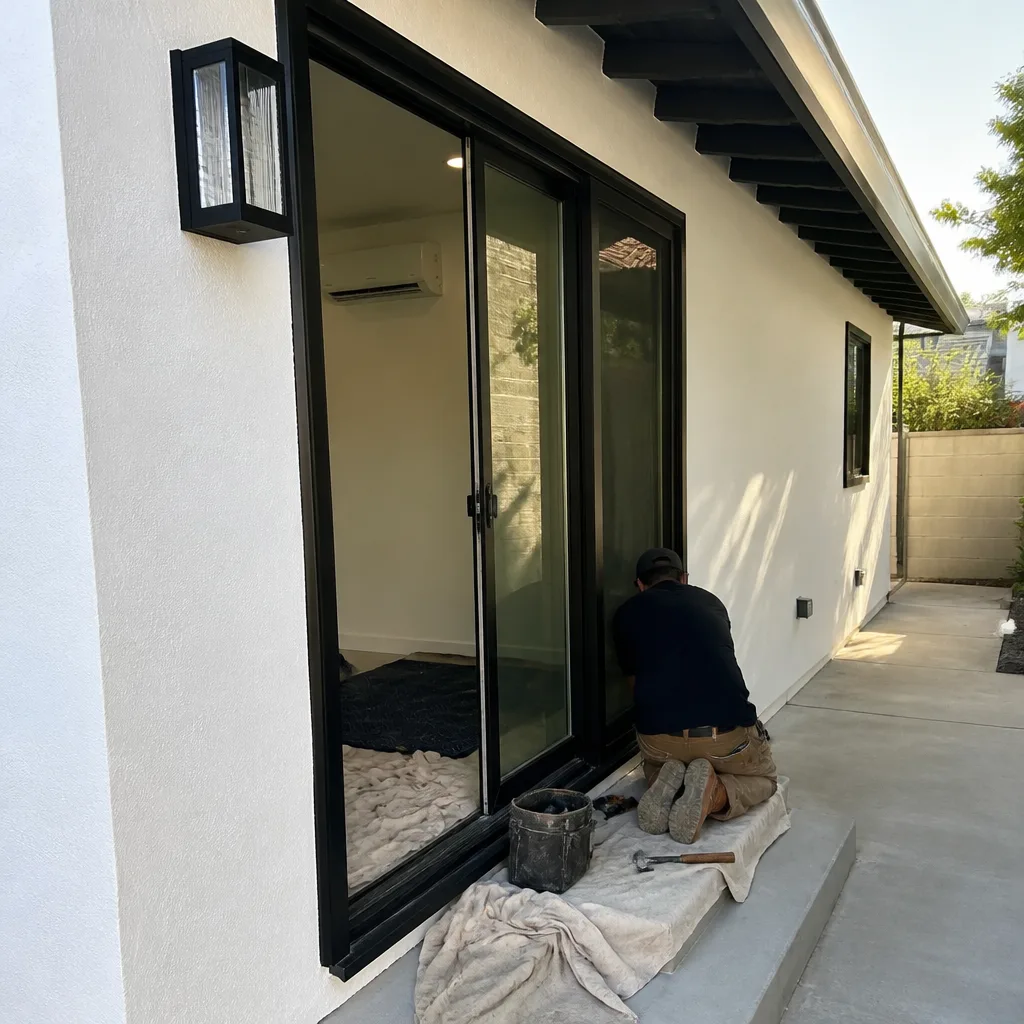 After
AfterHard Costs by ADU Type in Long Beach
Hard costs are the bricks, lumber, labor, and finishes. They’re the easiest to quote and the hardest to hide, which makes them the least dangerous part of your budget. Here’s what we’re seeing for construction-only pricing in Long Beach’s current market, with the variables that push each range up or down.
Garage Conversion ADU
Construction range: $95,000-$155,000 for a typical 400-550 square foot conversion.
The low end assumes a slab in good condition, existing electrical panel with adequate capacity, and a garage that was built to original permit. The high end covers slab replacement or reinforcement, seismic retrofit of existing walls, and the fire-rated separation that Long Beach Building & Safety requires when the garage shares a wall with the main house. We’ve converted garages in Belmont Heights where the 1950s slab was 3.5 inches, requiring a new 4-inch pour with vapor barrier, and in Bixby Knolls where the existing roof structure couldn’t carry the insulation and finish loads of a habitable space.
Variables that move this range:
- Slab condition: replacement adds $8,000-$18,000
- Electrical panel capacity: upgrade adds $4,000-$12,000
- Fire separation: rated drywall assembly adds $3,000-$6,000
- Headroom: dropping the slab or raising the roof adds $15,000-$35,000
For a deeper look at this ADU type, see our dedicated page on Garage Conversion ADU in Long Beach.
New Detached ADU
Construction range: $220,000-$320,000 for 450-750 square feet.
This is the most variable category because “new detached” covers everything from a stick-built cottage to a prefab system coordinated through a single design-build contract. A conventional stick-built unit in Long Beach runs higher due to site labor costs, while prefab options from Plant Prefab or Boxabl can compress the construction timeline and reduce weather delays. We’ve specified James Hardie siding on detached units in the Bluff Park area where the marine layer accelerates wood decay, and Tuff Shed structures for clients who want a fast, permit-ready shell.
The foundation drives the range more than the finishes. A standard spread footing on level ground is straightforward. A raised floor system for flood-prone areas near the Los Angeles River, or caissons for hillside lots in Signal Hill-adjacent neighborhoods, can add $25,000-$55,000 before framing begins.
Attached ADU (Addition)
Construction range: $180,000-$280,000 for 400-600 square feet.
Attached units require structural integration with the existing house, which means tie-in details, matching finishes, and often re-roofing a portion of the main structure. The fire separation between units is more complex than in a garage conversion because both sides are occupied. In Long Beach’s coastal zone, we’ve seen conditions of approval require matching architectural character, which can push exterior finishes toward premium grades.
Junior ADU (JADU)
Construction range: $65,000-$115,000 for up to 500 square feet within the existing footprint.
JADUs are interior conversions, not additions. The savings come from using existing structure, but the constraints are tight: separate exterior entrance, efficiency kitchen, and shared or separate bathroom. The cost driver is rarely the finishes; it’s the plumbing and electrical routing through existing walls, and the separate meter or submeter that Long Beach Utilities may require for rental units.
Prefab and Modular Coordination
Prefab units from brands like Cover, Dvele, or Mighty Buildings arrive with construction costs partially pre-determined by the factory. The savings are in timeline, not always in absolute dollars. What prefab does compress is the uncertainty: factory pricing is fixed before site work begins, and the coordination of crane access, foundation prep, and utility stub-outs becomes the critical path. Ellery specifies and coordinates these systems under the same single contract as conventional builds, so the design, permit set, and factory handoff are one responsibility.
The Full Soft Cost Inventory
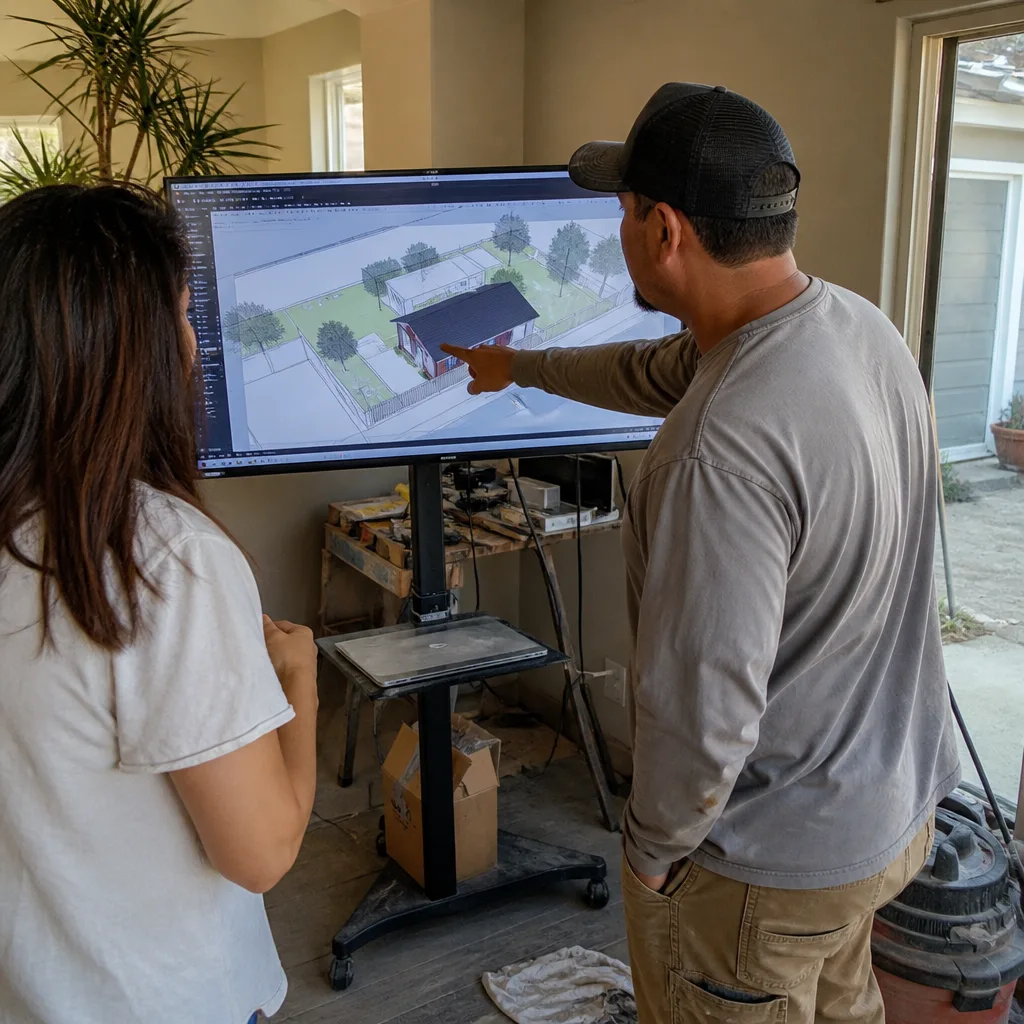
Soft costs are where budgets die quietly. They’re also where most online cost calculators fail completely. Here’s the inventory we prepare for every Long Beach client, with current figures and the conditions that trigger each line item. Our ADU Design & Permitting Maintenance Checklist for Long Beach Homeowners covers these items in full detail.
| Soft Cost Item | Typical Range in Long Beach | Trigger / Notes |
|---|---|---|
| Architectural design & permit set | $8,000-$18,000 | Required for all ADU types; JADU at lower end |
| Structural engineering | $3,500-$8,500 | Required for detached, attached, and most garage conversions |
| Soils / geotechnical report | $2,500-$6,000 | Hillside lots, fill soils, or coastal zone; not required on flat, native soil |
| Title 24 energy calculations | $800-$1,500 | Required for all new construction; exempt for some conversions |
| Long Beach Planning review fees | $1,200-$2,800 | Varies by unit type and coastal/historic overlay |
| Long Beach Building & Safety permit fees | $3,500-$7,500 | Based on valuation; detached at higher end |
| School fees (if applicable) | $3.48/sq ft | State-mandated; collected by Long Beach Unified at permit |
| Utility connection / capacity fees | $2,000-$8,000 | Water, sewer, gas; varies by existing service size |
| Electrical service upgrade | $4,000-$15,000 | See dedicated section below |
| Survey (if required) | $1,500-$3,500 | Boundary disputes, setback variances, or coastal commission review |
| Environmental review (rare) | $2,000-$5,000 | Coastal zone, historic districts, or environmentally sensitive areas |
Total soft cost range: $28,000-$75,000 depending on project complexity and site conditions. This is the $40,000-$80,000 gap we referenced in the opening. A garage conversion on flat ground in Lakewood Village might hit the low end. A new detached unit on a Signal Hill-adjacent lot with fill soils and a 200-amp service upgrade will push the high end.
Under Haven Standard Clause 1, every Ellery project is quoted with a written price before any work begins. That written price includes every soft cost item that applies to your specific lot, not a generic allowance that shifts later.
Utility Connections and Service Upgrades
The electrical service upgrade is the single most underestimated line item in Long Beach ADU budgets. Here’s why it matters and how to plan for it.
Southern California Edison Service Upgrades
Most Long Beach homes built before 1990 have 100-amp service. An ADU with electric heat, water heater, and kitchen appliances typically requires 200 amps for the combined property. The upgrade path:
- Load calculation: We calculate the demand for main house plus ADU per NEC Article 220. This determines whether 200A suffices or 320A/400A is required.
- SCE application: Southern California Edison requires a service upgrade application with load letter. Lead time is currently 6-10 weeks for standard residential service.
- Underground service: Many Long Beach neighborhoods, especially Belmont Shore and Naples, have underground utilities. Trenching, conduit, and coordination with SCE adds $3,000-$8,000 to the electrical contractor’s work.
- Panel and meter: New main panel, subpanel for ADU, and separate or submetered billing configuration.
Total electrical upgrade range: $4,000 for a simple overhead 100A-to-200A swap, to $15,000+ for underground service with trenching and dual metering. The schedule impact is 6-14 weeks depending on SCE backlog and whether trenching permits are required from the City of Long Beach.
Water and sewer connections are typically less dramatic. Long Beach Utilities charges connection fees based on meter size and line extension requirements. Most in-fill lots tie into existing mains without extension. The exception is alley-served properties or corner lots where the main is on the opposite frontage, which can require directional boring or open trenching through the yard.
Design-Build vs. Cost-Plus: What Each Means for Your Budget
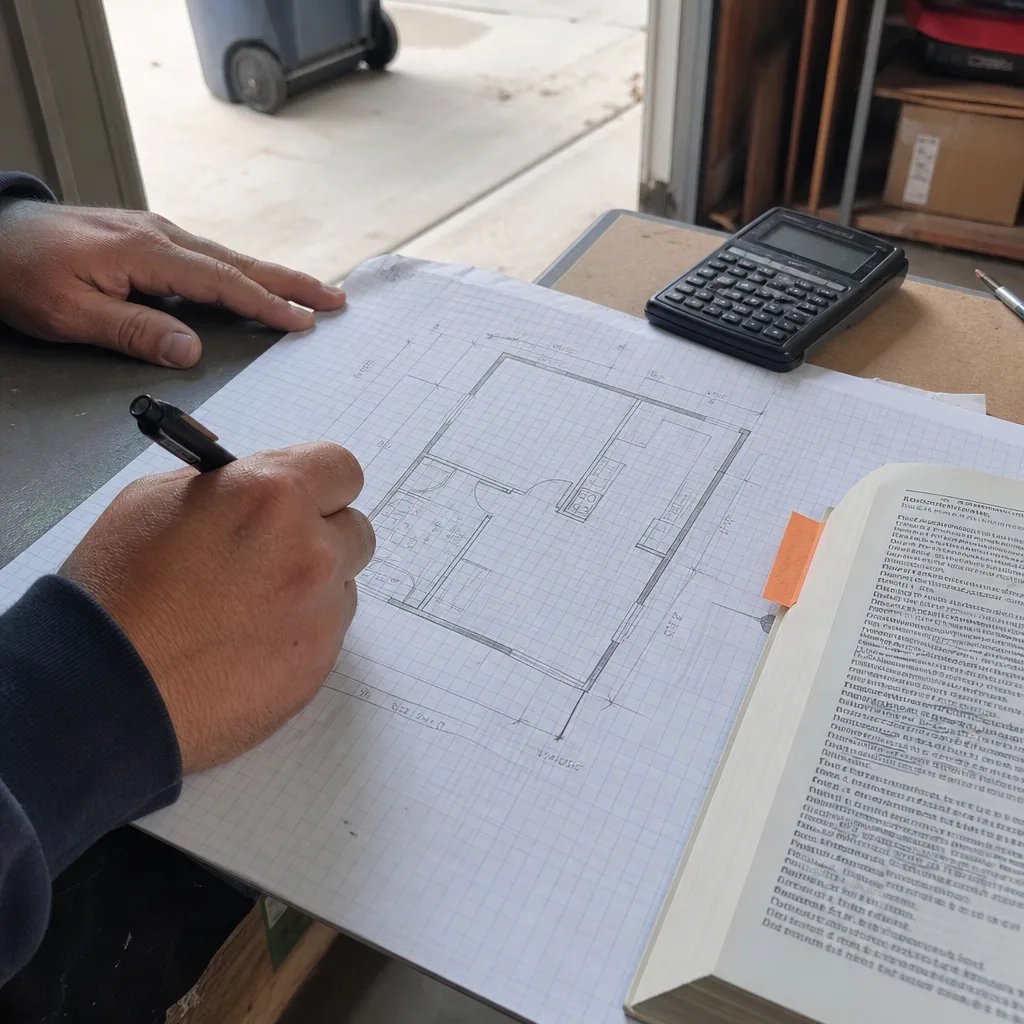
The contracting model you choose has more impact on your final cost than the countertop material or the window brand. Here’s the distinction that every Long Beach homeowner should understand before signing.
Cost-Plus General Contractor
In a cost-plus arrangement, the contractor bills actual costs plus an agreed percentage, typically 15-25%. The homeowner bears all cost overruns. The estimate you receive is a projection, not a commitment. If lumber prices spike, if the slab needs replacement, if the city requires a soils report, those costs flow through to you.
The risk is structural, not theoretical. We’ve reviewed cost-plus contracts where the “estimate” contained 30% allowances, and the final cost exceeded the estimate by $67,000. The homeowner had no recourse; the contract explicitly permitted it.
Fixed-Price Design-Build
Ellery operates as a design-build studio: the architectural drawings, structural engineering, permit set, and construction are a single contract at a single written price. This eliminates the designer-versus-builder blame gap. If the foundation detail in the permit set doesn’t match field conditions, we revise the drawing and absorb the coordination cost. We don’t issue a change order pointing at the architect.
Under Haven Standard Clause 1, the written price is established before any work begins. Under Clause 5 (No Surprises), the scope is locked at signing. No door-side upsells, no scope creep. The 365-Day Done Right Promise means if the finished ADU is not built to the permitted drawings, we make it right, in writing, before the project starts.
For a homeowner financing through a HELOC or construction loan, the fixed-price model protects draw schedule predictability. Lenders prefer it. Appraisers prefer it. And homeowners who’ve already read the three-star reviews know why it matters.
How to Read a Long Beach ADU Bid for Hidden Allowances
An allowance is a placeholder disguised as a cost. It looks like a line item, but it’s actually a blank check. Here’s how to spot them and what to demand instead.
The Five Most Common Hidden Allowances
- “Utility connections - allowance $3,500”: This covers a best-case scenario. If SCE requires a service upgrade, if the water main needs extension, or if gas lateral replacement is required, the allowance is exhausted in the first week. Demand a line-item breakout with trigger conditions: “100A existing service confirmed by visual inspection; upgrade to 200A if load calc requires, priced at $X.”
- “Site work - allowance $5,000”: On a flat lot with no drainage issues, this might suffice. In Long Beach, where the coastal zone has strict grading and drainage standards, and where older neighborhoods have undocumented fill, site work can run $15,000-$40,000. Demand a site visit with written findings before contract signing.
- “Permit fees - allowance $2,500”: Long Beach Building & Safety fees are based on project valuation. A $250,000 detached ADU generates higher fees than a $120,000 garage conversion. The permit fee should be calculated from the actual estimated valuation, not a flat guess.
- “Soils report - if required”: This language shifts the risk to you without defining the trigger. A proper bid states: “Soils report required for hillside lots, fill soils, or coastal zone per geotechnical recommendation; priced at $X if triggered.”
- “Finish materials - allowance $8,000”: This is the classic budget killer. The allowance covers builder-grade finishes. When you select mid-grade tile or solid-surface countertops, the upgrade cost is pure profit margin for the contractor. In a fixed-price design-build contract, finishes are specified in the permit set and priced accordingly before signing.
The test is simple: if you can’t verify the number independently, it’s an allowance. If the contractor can’t explain how they arrived at the figure, it’s an allowance. If the contract says “plus actual cost,” it’s definitely an allowance.
Long Beach-Specific Variables That Move the Price
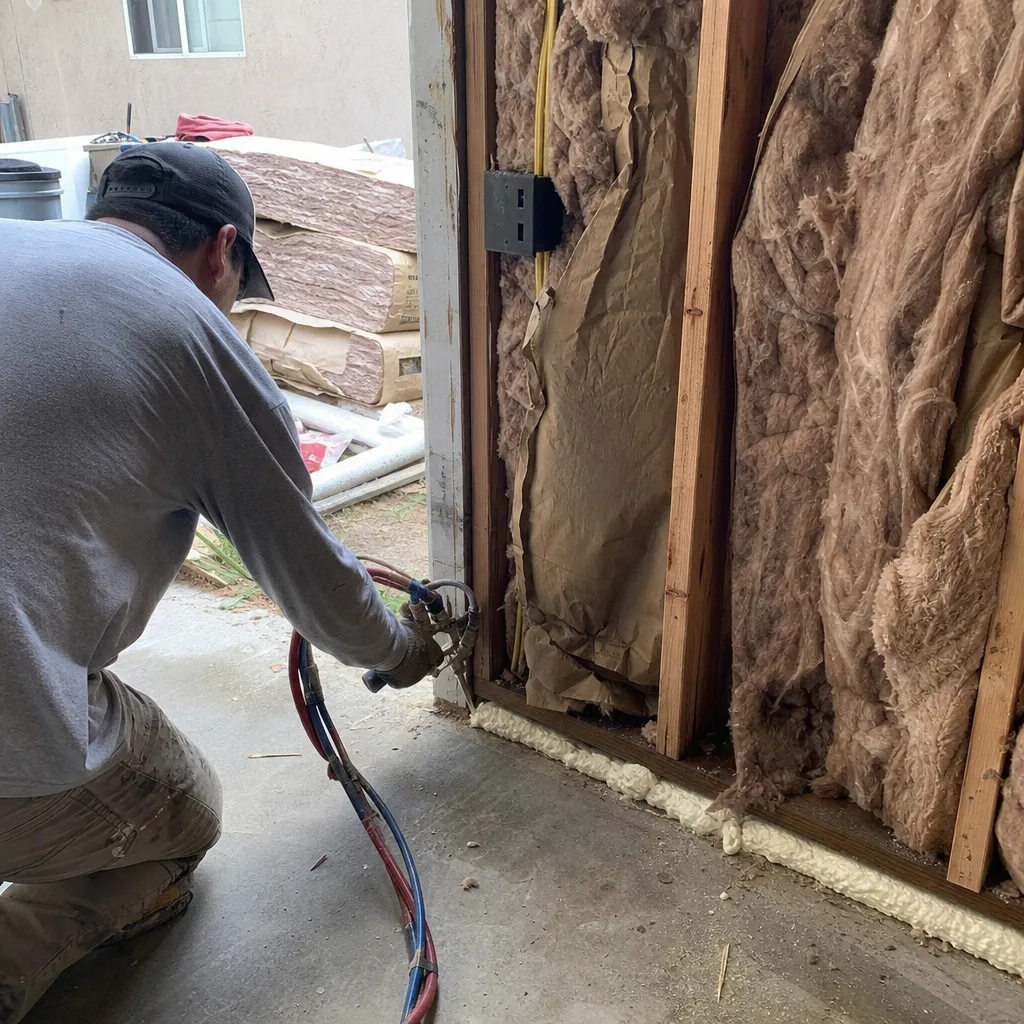
Every city has its own friction. Here are the Long Beach conditions that we’ve learned to price explicitly, neighborhood by neighborhood, lot by lot.
Coastal Zone and Tsunami Inundation Areas
Properties west of Ocean Boulevard and portions of Belmont Shore, Naples, and the Peninsula fall within the California Coastal Zone. ADU projects here may require Coastal Development Permit review, which adds 4-12 weeks to the planning timeline and $2,000-$5,000 in additional fees. Tsunami inundation mapping affects foundation requirements; we’ve specified raised floor systems in the Peninsula where base flood elevation exceeds grade.
Historic Districts
Long Beach has multiple historic districts with design review requirements. A new detached ADU in Bluff Park or Carroll Park may require architectural compatibility review, which affects exterior materials, roof pitch, and window proportions. This isn’t a barrier, but it’s a cost and schedule item that generic cost guides omit entirely.
Alley Access and Setback Variances
Many Long Beach lots, especially in the Zaferia area and parts of Central Long Beach, have alley access but narrow side yards. The required setback from the property line, typically 4 feet for fire access, may leave insufficient room for a legal detached unit. A setback variance, the extra distance the city requires between your new ADU and the property line, requires planning commission approval and adds 6-10 weeks plus application fees.
Marine Layer and Material Selection
Long Beach’s marine climate accelerates corrosion of unprotected steel and decay of untreated wood. We specify James Hardie fiber-cement siding on coastal-exposed elevations, and upgraded fastener schedules for hardware within 3 miles of the water. These aren’t premium upgrades; they’re durability requirements that prevent callback costs in years 5-15.
Grading and Drainage
Long Beach’s flat topography is deceptive. Many lots, especially in the developed marshlands of the west side, have poor drainage and seasonal groundwater. A slab-on-grade ADU in these areas may require engineered fill, subdrain systems, or raised floor construction. We’ve encountered groundwater 18 inches below grade in the Washington neighborhood, requiring a complete redesign of the foundation system.
Common Mistakes to Avoid
- Using a construction-only cost per square foot as your budget. The $400/sq ft figure excludes design, engineering, permits, and site work. Multiply by 1.35-1.55 for all-in cost, or use the type-specific ranges in this guide.
- Assuming your garage conversion is “simple” without a slab inspection. We’ve found post-tensioned slabs with no documentation, slabs poured without vapor barrier, and 2.5-inch slabs that can’t carry residential loads. The inspection takes an hour; the surprise takes $15,000.
- Signing a contract with more than 15% in allowances. This is a cost-plus structure wearing a fixed-price costume. Demand line-item pricing with defined triggers for every variable.
- Ignoring the electrical service until construction starts. SCE lead times are 6-10 weeks minimum. If you discover the need for an upgrade after breaking ground, your project sits idle while the permit clock runs.
- Choosing a designer and contractor separately to “save money.” The designer blames the contractor for buildability; the contractor blames the designer for missing details. The homeowner pays for both sides to argue. A single-contract design-build model eliminates this gap.
- Neglecting the school fee. Long Beach Unified collects $3.48 per square foot at permit issuance. On a 750 sq ft ADU, that’s $2,610. It’s not optional, and it’s not included in most online calculators.
- Failing to verify the contractor’s license and insurance directly. Ellery’s license number appears on every page, verified, not just claimed. Any contractor who hesitates to provide this information is a risk you can’t afford on a six-figure project.
When to Call a Professional
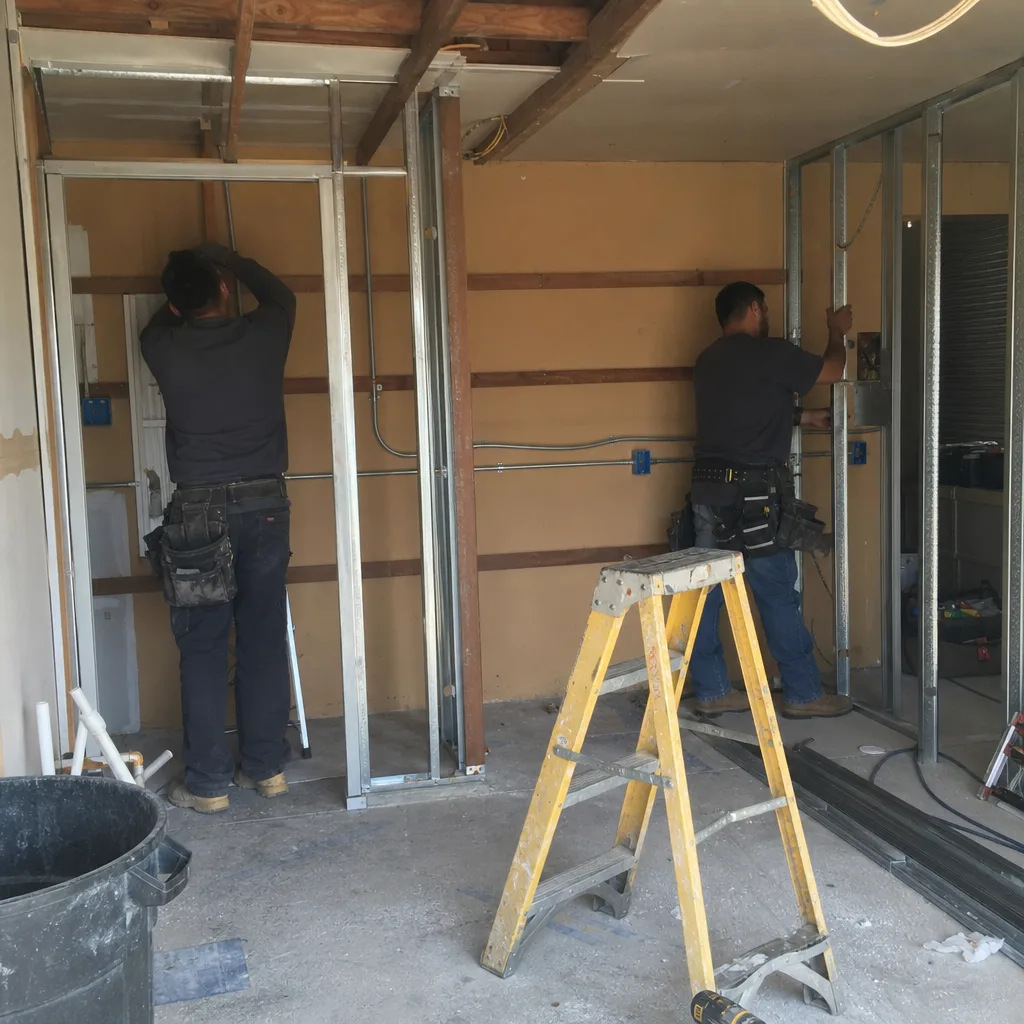
Call a licensed design-build studio when you’re still in the research phase, not when you’re ready to break ground. Browse our more guides & resources to continue your research. The most expensive mistake is designing for a budget that doesn’t match your lot conditions. A site-specific feasibility analysis, including preliminary setback verification, utility capacity check, and slab or foundation assessment, costs nothing at Ellery and prevents the $40,000 surprises that derail projects.
Specifically, seek professional guidance if your lot is in the coastal zone, if your home was built before 1975, if your electrical panel is rated under 150 amps, if you’ve experienced drainage or groundwater issues, or if you’re considering a prefab system and need coordination between factory specifications and local permit requirements. Ellery ADU Studio Long Beach offers free estimates in Long Beach, and a Free Second Opinion on any written estimate already in hand. Call (562) 414-4842 to schedule.
Frequently Asked Questions
All-in costs range from $165,000 for a garage conversion to $385,000 for a new detached unit, including design, engineering, permits, and utility connections. The final figure depends on unit type, lot conditions, and whether your contract is fixed-price or cost-plus. Call (562) 414-4842 for a written quote on your specific property, estimates are free.
A Junior ADU (JADU) is typically the lowest-cost option at $65,000-$115,000 all-in, because it uses existing interior space without new foundation or roofing. However, JADUs are limited to 500 square feet, must be within the existing footprint, and require owner-occupancy of either the main house or the JADU. The cost advantage disappears if extensive plumbing rerouting or electrical upgrades are needed.
Under a fixed-price design-build contract with Ellery, the price does not change unless you request a scope modification. Under Haven Standard Clause 5, the scope is locked at signing. In a cost-plus contract with a general contractor, the price is inherently variable, and allowances frequently result in mid-project increases. Always verify which model you’re signing.
Yes. Ellery prepares the complete permit set, submits to Long Beach Planning and Building & Safety, and manages corrections and approvals as part of the single contract. The permit set is the core product, not an afterthought. You receive copies of all approved drawings and permit cards for your records.
Design and permitting typically take 4-7 months, depending on project complexity and whether coastal or historic review is required. Construction adds 4-8 months for garage conversions and attached units, 6-10 months for new detached units. Prefab systems can compress construction by 30-50% but still require the same permitting timeline. Electrical service upgrades through SCE add 6-14 weeks if triggered.
The most commonly overlooked costs are the school fee ($3.48/sq ft), electrical service upgrades ($4,000-$15,000), and site work for drainage or grading issues ($5,000-$40,000). Long Beach also charges separate Planning and Building & Safety fees that together run $4,700-$10,300 for typical projects. A complete bid should list each fee individually, not bury them in a single “permits and fees” allowance.
Most clients use a HELOC, cash-out refinance, or construction loan. Some lenders offer ADU-specific products with higher loan-to-value ratios. Because Ellery provides a fixed written price before work begins, our clients can secure firm loan commitments rather than estimated draws. We provide the documentation package, permit set, and fixed-price contract that lenders require for approval.
The Bottom Line
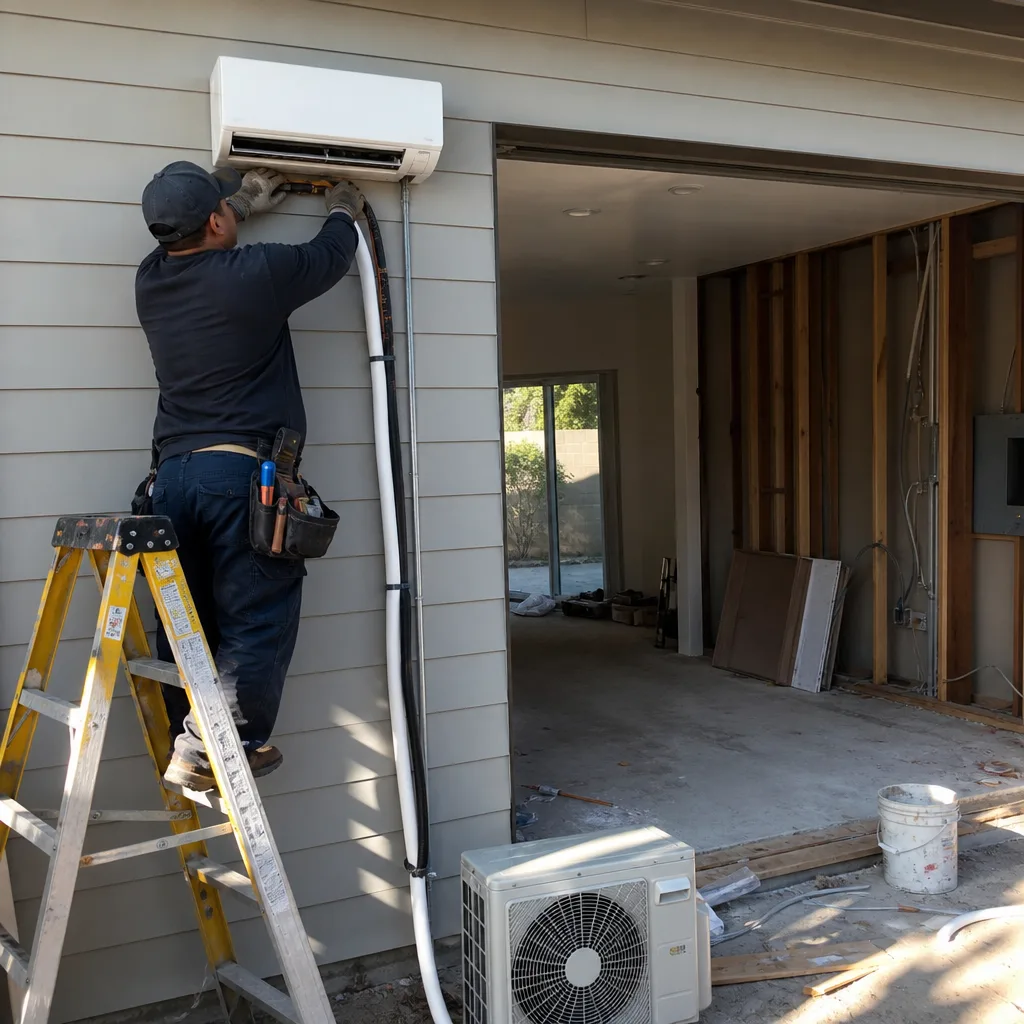
ADU costs in Long Beach span a $150,000 range because the projects themselves span from 400-square-foot interior conversions to 750-square-foot new construction on challenging lots. The critical distinction is not the construction cost per square foot but the completeness of the estimate you receive before signing. A bid with 30% in allowances is not a budget; it’s a forecast of future conflict. A fixed-price design-build contract with every soft cost identified, every utility condition verified, and every promise backed in writing, that’s the foundation of a project that finishes on budget. Ellery has designed, permitted, and built 900+ ADUs since 2015, every one with a written price before work started and a documented photo record when work was complete.
Call (562) 414-4842 to schedule your free estimate, or bring us any written estimate for a Free Second Opinion. A live person answers calls 24/7.
Written by Nadia Ellery, Owner at Ellery ADU Studio Long Beach, serving Long Beach since 2015.