
Last updated September 25, 2026
Seasonal ADU Care for Long Beach: Year-Round Homeowner’s Guide
Long Beach averages only 12 inches of rain per year, but the six-week window when that rain falls accounts for the majority of water-intrusion claims on newly constructed detached ADUs. The flashing and grading issues that cause them were never visible during the dry season. In this guide and our more guides & resources, you’ll learn how to use Long Beach’s mild climate as a maintenance trigger rather than an excuse to defer care. We’ll cover the pre-rain checklist that prevents the moisture intrusion we see most often in Belmont Heights and Bixby Knolls ADUs, the summer humidity thresholds that damage wood-framed assemblies, and the documentation habits that protect your warranty and resale value.
Quick Answer
ADU maintenance in Long Beach should follow a four-season rhythm - detailed in our ADU Design & Permitting Maintenance Checklist for Long Beach Homeowners - starting with pre-rain inspection and drainage correction in October, moisture-content monitoring and pest assessment in February, HVAC and filter service before June Gloom, and exterior seal verification after summer heat cycles. Document every check with dated photos to support warranty claims and future resale disclosures.
Table of Contents
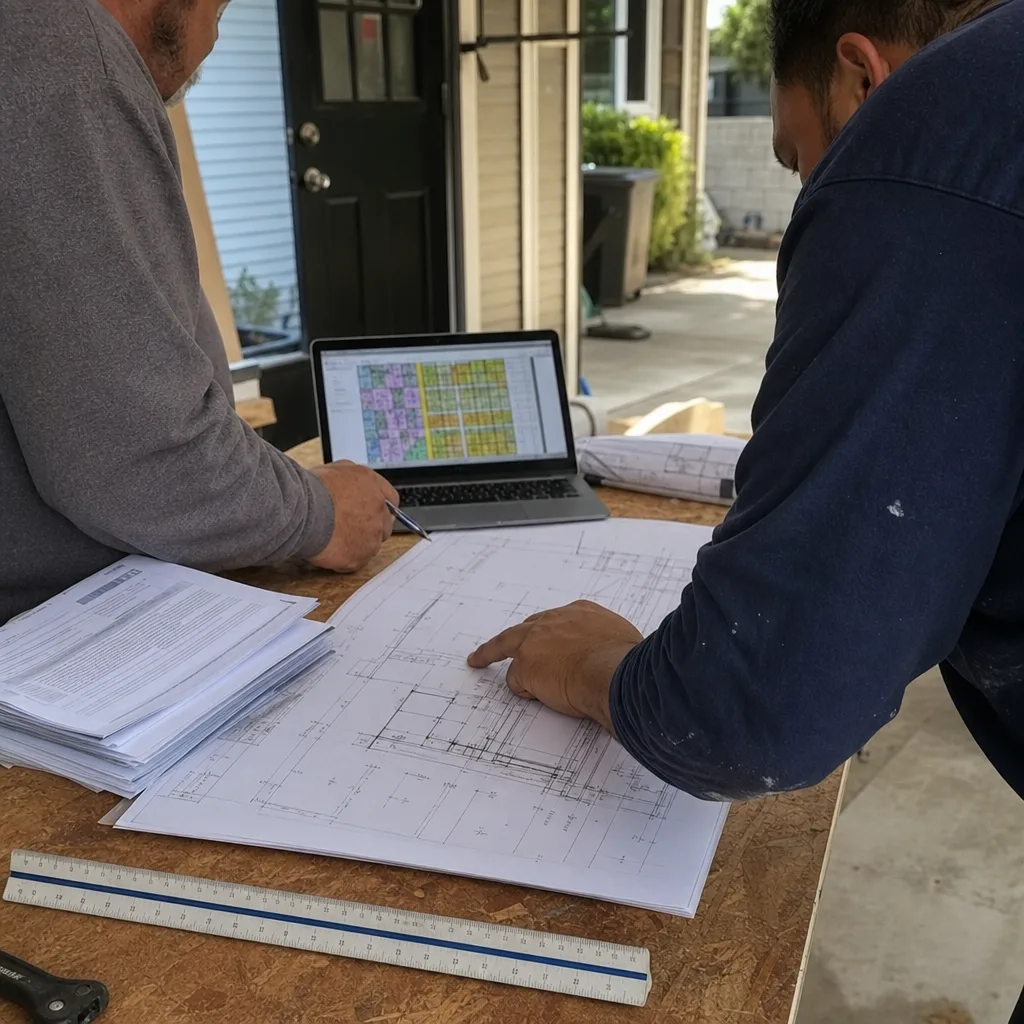
- Why Seasonal Maintenance Matters More in Long Beach’s Mild Climate
- Fall Pre-Rain Checklist: The Six-Week Window That Destroys ADUs
- Winter Moisture Monitoring: Wood-Frame Assemblies and Coastal Humidity
- Spring Pest Inspection: Why February Beats June for Termite Detection
- Summer HVAC and Filter Maintenance: June Gloom, Wildfire Smoke, and Salt Air
- How to Document Seasonal Checks for Warranty and Resale
- Special Considerations for Prefab and Modular ADUs in Long Beach
- Common Mistakes to Avoid
- When to Call a Professional
- Frequently Asked Questions
- The Bottom Line
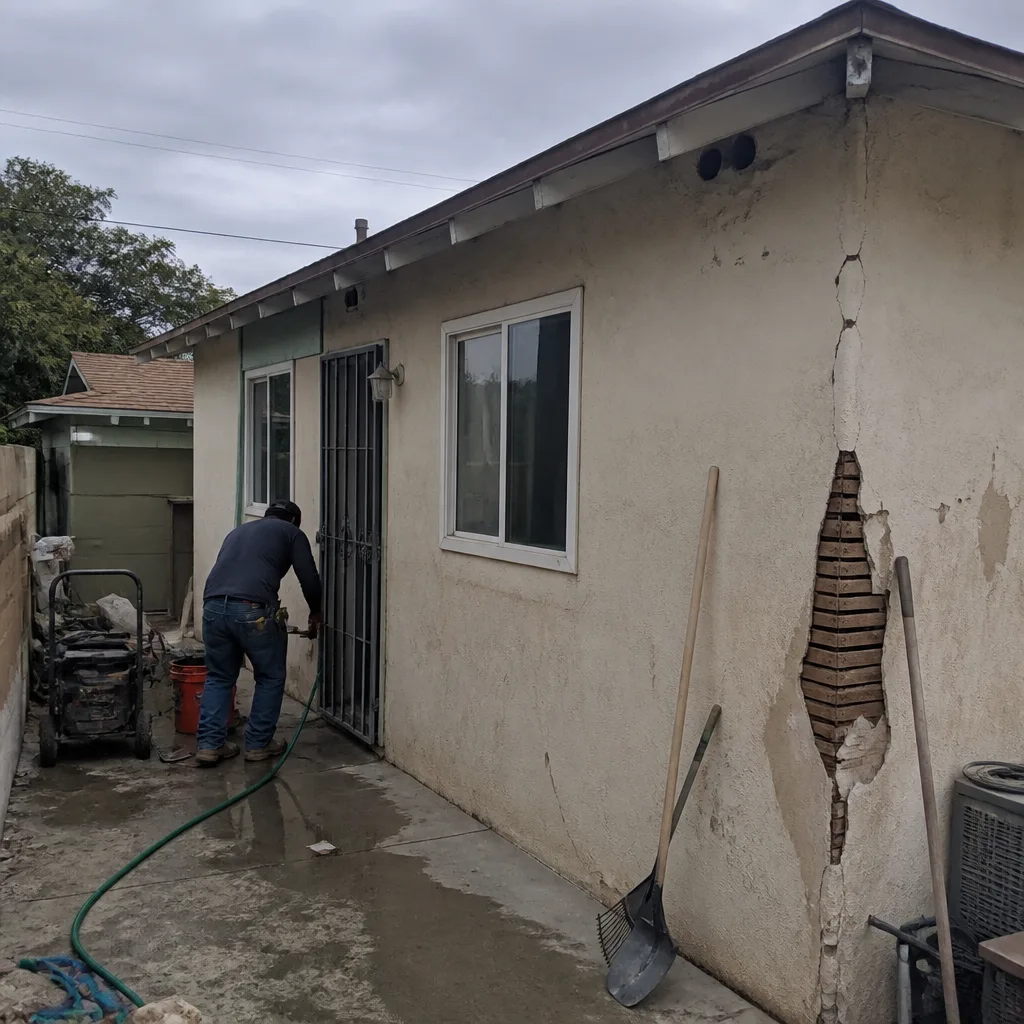 Before
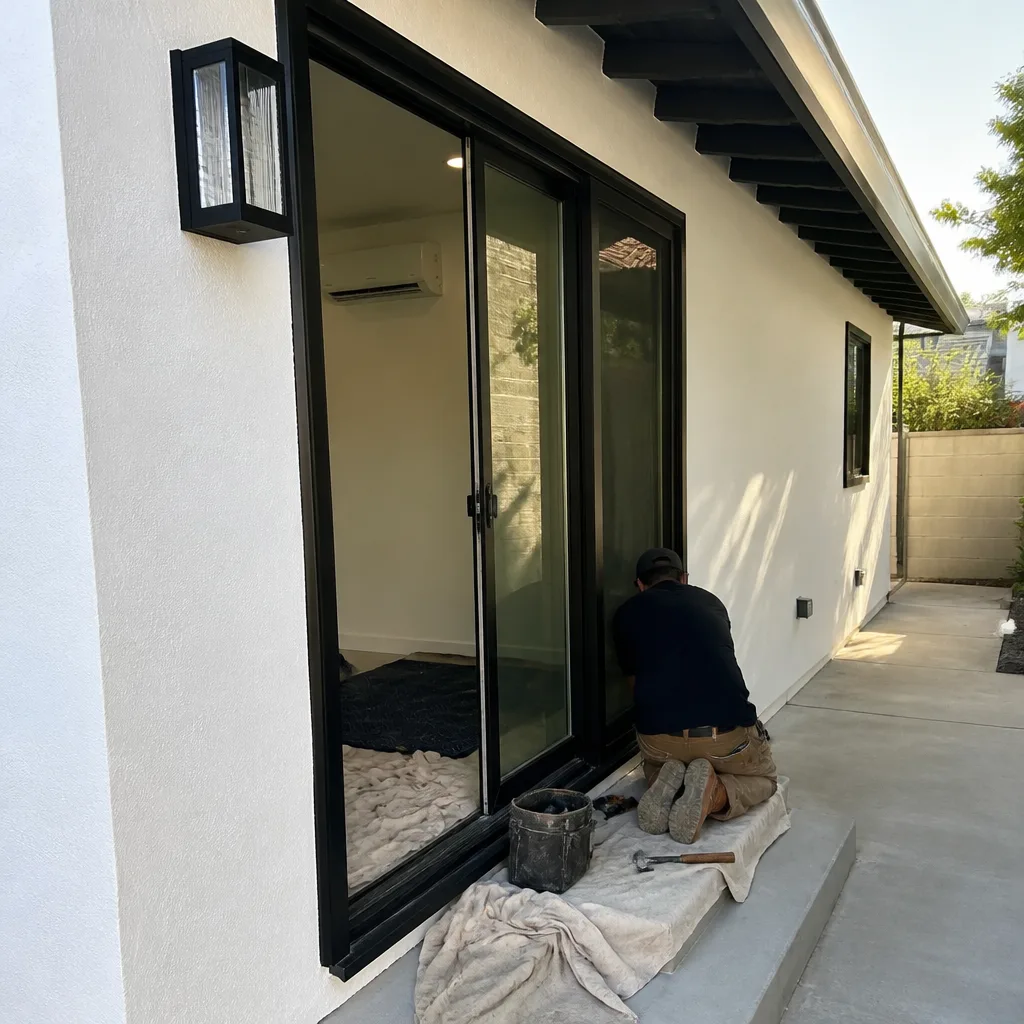 After
AfterWhy Seasonal Maintenance Matters More in Long Beach’s Mild Climate
Homeowners in climates with hard freezes or monsoon seasons don’t debate whether to winterize or storm-prep. The weather forces the issue. Long Beach’s year-round temperate weather - average lows in the 40s, highs in the 80s - creates a dangerous complacency. We’ve inspected ADUs in Naples and Alamitos Beach where three years of deferred maintenance had produced rot in wall sheathing that a simple annual caulk inspection would have prevented.
The problem is visibility. Water intrusion in a Minnesota winter announces itself with ice dams and interior stains. In Long Beach, a compromised roof penetration or failed door threshold may leak only during the December-through-March rain window, then dry completely by April. The damage accumulates invisibly: mold in stud cavities, termite-attracting moisture in sill plates, corrosion in galvanized connectors. By the time you smell mildew or see a wall stain, the repair has moved from maintenance to remediation.
Our Ellery ADU Studio Long Beach home team has documented this pattern across 900+ ADU projects since 2015. The ADUs that age well share one trait: the owner treats the calendar as a maintenance trigger, not the weather. The Haven Standard, Clause 7 (Documented Condition), requires that we deliver a photo record at project completion precisely so future seasonal checks have a baseline for comparison. If you don’t know what the flashing looked like when it was correct, you can’t recognize when it has shifted.
Long Beach’s specific risk factors compound the maintenance case:
- Marine layer persistence: June Gloom brings 80%+ relative humidity for weeks, even without rain, creating condensation risks in unventilated cavities
- Salt air corrosion: Within two miles of the coast, fasteners and flashing details degrade faster than inland codes assume
- Expansive clay soils: The Wilmington Formation clay underlying much of Long Beach shrinks and swells with moisture changes, stressing foundation-to-wall connections
- Wildfire smoke transport: Southern California fire seasons now produce particulate loads that clog filters and strain mini-split systems designed for mild air
The seasonal approach we outline below addresses each of these factors at the time of year when intervention is most effective - and least expensive.
Fall Pre-Rain Checklist: The Six-Week Window That Destroys ADUs
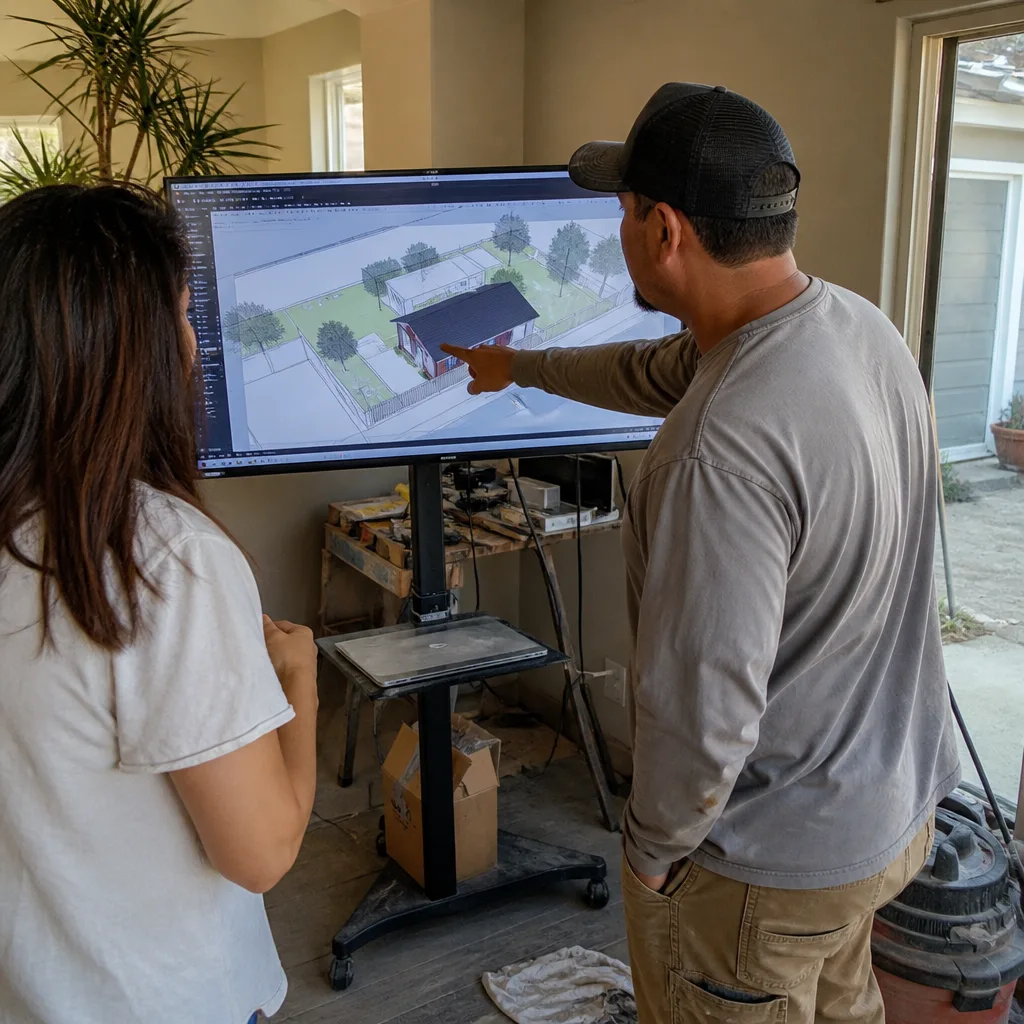
Most water-intrusion damage in Long Beach ADUs occurs between mid-December and early February, when Pacific storm systems drop the majority of our annual rainfall in concentrated episodes. The critical maintenance window is October through mid-November: after summer heat has finished its expansion-contraction cycles, before the first significant rain.
We perform pre-rain inspections for ADU owners across Long Beach, from the hillside lots of Signal Hill adjacencies to the flat-grade properties near the Los Angeles River. The inspection criteria don’t vary, but the failure modes do. Hillside ADUs see more drainage-grading issues; flat lots near the water table see more slab-edge moisture.
Roof Penetrations and Flashing
Start with the roof. On a new detached ADU in Long Beach, check every penetration: plumbing vents, electrical mastheads, exhaust fan terminations, and any solar mounting feet. The inspection standard we use is simple: the flashing should be fully adhered, with no lifted edges, and the sealant bead (if specified in the original drawings) should be continuous and pliable, not cracked or chalking.
For Tuff Shed and other panelized roof systems, verify that ridge caps and panel overlaps are seated correctly. These systems move more with temperature swings than stick-framed roofs, and the fall check catches the loosening that summer expansion produced.
On James Hardie siding systems with roof-wall intersections, confirm that the kick-out flashing diverts water into the gutter, not behind the siding. We’ve replaced Hardie panels in Long Beach ADUs where this detail was omitted or had slipped - the siding itself doesn’t rot, but the OSB or plywood behind it does.
Stucco and Sealant Joints
Walk the exterior and examine stucco at all horizontal terminations: window sills, door thresholds, the top of foundation walls. Hairline cracking in stucco is normal; cracking wider than 1/16 inch, or any crack that admits a fingernail, needs repair before rain. The critical detail is the weep screed at the base of stucco walls - it must be clear of soil, mulch, or hardscape that blocks drainage.
Sealant joints around windows and doors should be inspected for adhesion failure. Pull gently at a corner; if the sealant separates from the frame or the substrate, it needs replacement. In Long Beach’s UV exposure, quality polyurethane sealants typically last 5-7 years; lesser products fail in 2-3.
Door Thresholds and Weatherstripping
ADU entry doors, especially those facing west or southwest, take the most sun and the most rain when storms arrive. Check the threshold for level - a threshold that has settled or bowed creates a ponding surface that overwhelms the door sweep. Replace weatherstripping that has compressed to the point of light leakage; the test is a flashlight from the exterior at night, visible from the interior.
Site Drainage and Grading
This is where Long Beach’s flat lots create specific risk. The grade should fall away from the ADU foundation at a minimum of 5% for the first 10 feet. On many Long Beach properties, especially in the narrower lots of Belmont Shore, this slope has been flattened by landscaping changes or settling. Re-establish grade before the rains, or install a surface drainage channel if space doesn’t permit natural fall.
Clean gutters and downspouts. Verify that downspouts discharge at least 6 feet from the foundation, or into a drainage system that does. We’ve seen ADU foundations in Long Beach with chronic moisture where a single disconnected downspout was dumping against the wall.
Fall Pre-Rain Checklist Summary
- Inspect all roof penetrations and flashing for lift, separation, or sealant failure
- Check stucco for cracks >1/16 inch and clear weep screeds
- Test door thresholds for level and weatherstripping for compression
- Verify site grading falls 5% away from foundation for 10 feet minimum
- Clean gutters and confirm downspout discharge points
- Photograph all conditions for comparison with next year’s check
Winter Moisture Monitoring: Wood-Frame Assemblies and Coastal Humidity
Long Beach winters don’t freeze, but they do humidify. January and February relative humidity averages 65-75%, with marine layer incursions that can keep surfaces damp for days. For wood-framed ADUs, the risk isn’t the humidity itself - it’s the combination of humidity with any air leakage path that allows moist air to reach cold sheathing or framing.
We recommend February as the active monitoring month. By then, any fall maintenance gaps have had exposure, and the data you collect establishes a baseline before the drier spring arrives.
Moisture Content Thresholds
Wood moisture content (MC) in a healthy wall assembly should stay below 20%. Above 20%, fungal growth becomes possible; above 28%, rot organisms are active. In Long Beach’s climate, we see two failure patterns: localized wetting from leaks (roof, window, plumbing) that drives MC above 30% in specific areas, and diffuse moisture accumulation from air leakage that keeps whole assemblies at 18-22% - not yet catastrophic, but degrading fast.
You don’t need professional equipment to screen for problems. A basic pin-type moisture meter costs $40-60 and gives readings at depth, not just surface. We recommend the Wagner or Delmhorst consumer models. Test at these locations:
- Window and door corners on the interior drywall, 6 inches from the frame
- Baseboard areas below windows, where condensation tracks
- Ceiling areas near roof penetrations
- Crawl space or raised-floor rim joists, if accessible
Readings above 18% warrant closer inspection. Readings above 25% indicate active moisture intrusion that needs source identification and repair. Document the reading location, date, and value. Under The Haven Standard, Clause 7, our clients receive a photo record at completion that includes baseline moisture readings; your February check compares against that record.
Ventilation and Condensation
ADUs in Long Beach often run heating minimally - the climate doesn’t demand it. But intermittent heating can create condensation cycles: warm, moist interior air contacts cold sheathing at night, deposits moisture, and the brief morning warm-up doesn’t fully dry it before the next cycle. This is especially common in unvented attic assemblies or cathedral ceilings with inadequate air sealing.
The February check should include a visual inspection of attic or roof-assembly access points. Look for:
- Staining or darkening of sheathing, especially near penetrations
- Frost or moisture on nail points (indicates air leakage carrying moisture)
- Insulation that appears compacted or discolored
If your ADU uses a mini-split system for heating, resist the urge to set it to “dry” mode continuously. The dehumidification function can overcool surfaces and exacerbate condensation. Instead, maintain a consistent temperature setpoint and use targeted ventilation (bathroom fan, range hood) for moisture sources.
Spring Pest Inspection: Why February Beats June for Termite Detection
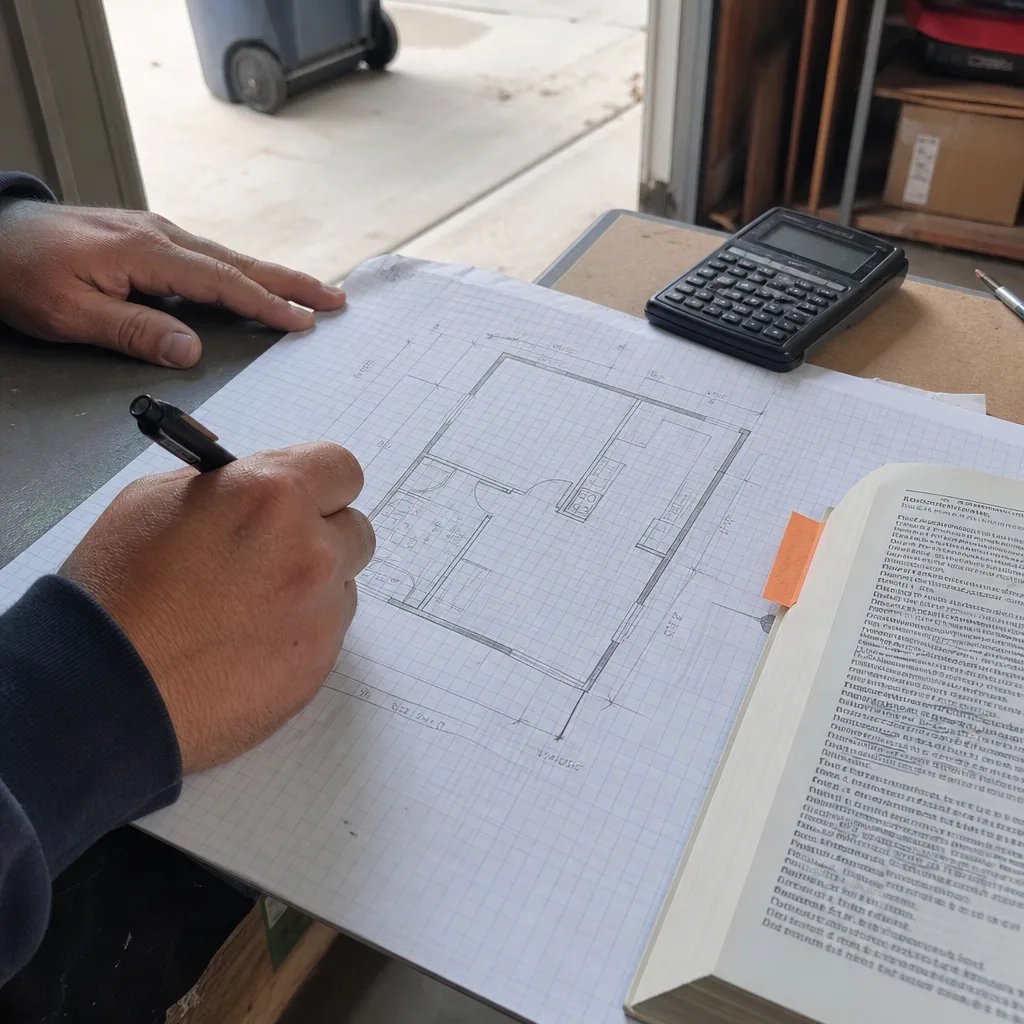
The Long Beach subterranean termite season runs February through May, with peak swarm activity typically in March and April. Here’s what most homeowners miss: the inspection that matters is the one that finds termites before they swarm, not the one that catches the swarm evidence after the fact. By June, when many homeowners schedule their “spring” pest check, the active infestation has been established for months and the structural damage is underway.
We recommend a professional termite inspection in February for every Long Beach ADU, regardless of age. The inspection should include the ADU specifically, not just the primary residence. Subterranean termites travel through soil; a detached ADU with independent foundation is a separate risk zone, not an extension of the main house.
What the February Inspection Covers
A proper inspection for Long Beach conditions examines:
- Foundation perimeter: Mud tubes on exposed concrete or stucco, especially where grade meets the wall
- Wood-soil contacts: Fence posts, planter boxes, or landscape timbers that touch the ADU structure and create bridge points
- Slab penetrations: Plumbing and electrical conduits that pass through the foundation, where termites exploit gaps
- Exterior wood: Eaves, fascia, and any unpainted or weathered wood that termites can access from the soil line
For garage conversion ADUs in Long Beach, pay special attention to the original garage door opening, now infilled with wall construction. The threshold area often retains wood debris or soil contact from the garage era, creating a termite highway that standard inspections miss.
Moisture-Termite Connection
Subterranean termites require moisture to survive. The moisture intrusion you prevented with fall maintenance, and monitored in February, directly reduces termite risk. We’ve treated ADUs in Long Beach where a chronic irrigation overspray against the foundation had created both moisture damage and active termite infestation. Fixing the irrigation eliminated the moisture; the termite treatment eliminated the colony. Either problem alone would have recurred.
Document the February inspection report with the pest control company’s findings, any treatment recommendations, and your action items. This documentation becomes part of the property’s maintenance history, required in California resale disclosures (see ADU Permits, Codes & Inspections in CA: What You Need to Know) and valuable for warranty claims if structural damage later appears.
Summer HVAC and Filter Maintenance: June Gloom, Wildfire Smoke, and Salt Air
Long Beach summers don’t stress HVAC systems with extreme heat, but they do present a particulate and humidity load that standard maintenance intervals don’t address. We see the most mini-split service calls in July and August - not from temperature failure, but from filters clogged with the accumulated load of June Gloom moisture, wildfire smoke transport, and coastal salt aerosol.
Filter Maintenance Calibrated to Long Beach Conditions
Standard manufacturer guidance suggests filter cleaning every 2-4 weeks during use. For Long Beach ADUs, we recommend a more specific protocol:
- Late May: Clean or replace filters before June Gloom begins. The marine layer carries fine salt particles that adhere to wet filter media and crystallize, reducing airflow permanently if not removed.
- Mid-July: Inspect filters after the first significant wildfire smoke transport event. Southern California fire seasons now produce smoke plumes that reach Long Beach even when fires are 100+ miles away. The PM2.5 load overwhelms standard filters and can damage heat exchangers if airflow is restricted.
- Late September: Final summer cleaning before heating season begins. This filter carries the accumulated load of the entire season; starting heating with a clogged filter risks overheating the indoor coil.
For mini-split systems, the cleaning process matters. Remove the filter and wash with lukewarm water, not hot - hot water can deform the plastic frame. Allow complete drying before reinstallation; a damp filter grows mold in the dark cassette. For the indoor coil, visible fin cleaning requires a foaming cleaner specific to HVAC use; we’ve seen homeowners damage fins with household cleaners that are too aggressive.
Condensate Drainage
June Gloom humidity produces more condensate than many systems are sized to handle continuously. Check the condensate drain line for flow: the indoor unit should produce visible drainage during humid periods. A drain that runs intermittently or not at all indicates a clog or improper slope. For ADUs with condensate pumps, test the pump float and verify discharge to a proper drain, not just to grade where it can undermine the foundation.
Salt Air Considerations
ADUs within one mile of the Long Beach coastline - Naples, Belmont Shore, Peninsula neighborhoods - experience accelerated corrosion on outdoor condensing units. The aluminum fins and copper tubing are vulnerable; we’ve replaced outdoor coils in coastal ADUs at half the expected service life. Protective coatings are available but must be applied before corrosion begins; once pitting is visible, the damage is structural. For new new detached ADU in Long Beach projects in coastal zones, we specify coated coils and elevated mounting to reduce salt spray exposure.
How to Document Seasonal Checks for Warranty and Resale
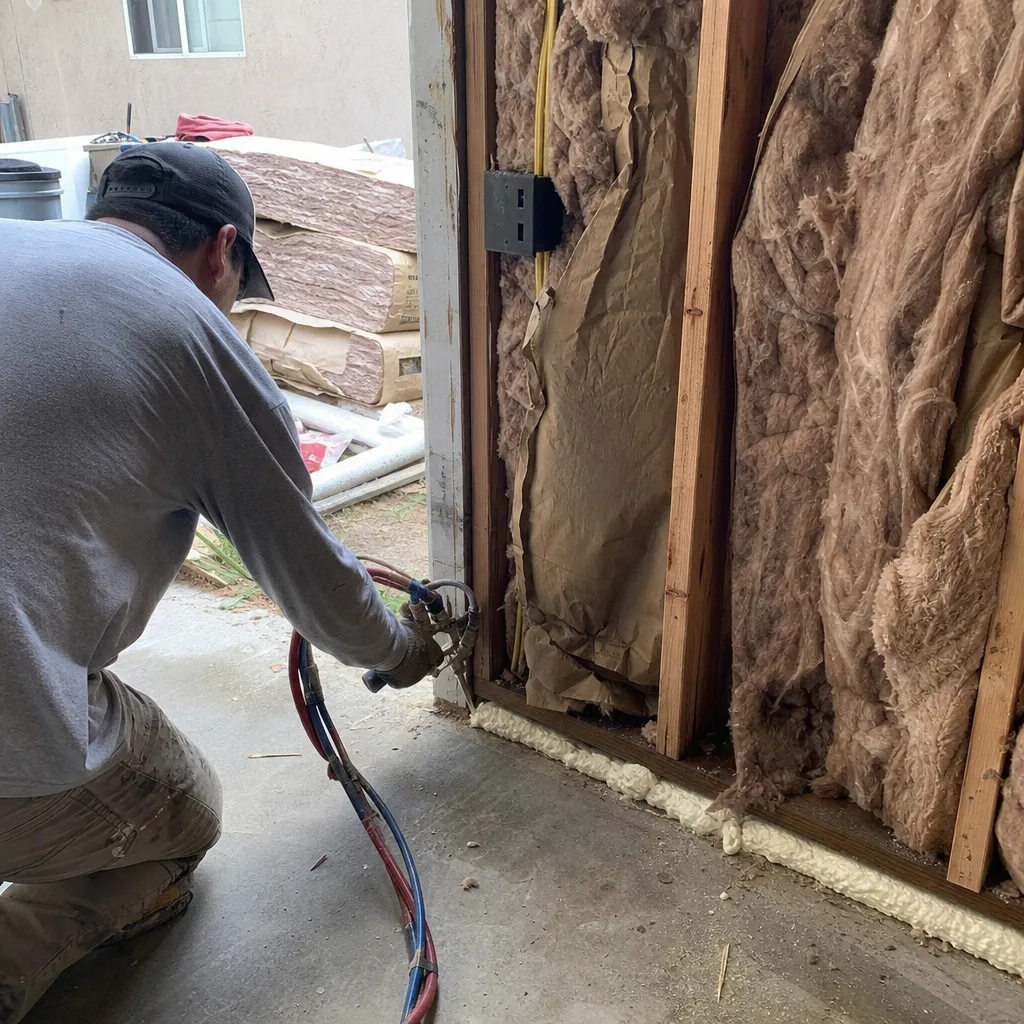
Maintenance records are not bureaucratic exercise. In our experience with 900+ ADU projects, the owners who can produce dated, photographic documentation of seasonal maintenance receive faster warranty response, smoother resale transactions, and higher sale prices. The California Residential Purchase Agreement requires disclosure of known material defects; a documented maintenance history demonstrates due diligence and reduces buyer uncertainty.
The Minimum Documentation Set
For each seasonal check, create a dated folder (digital or physical) containing:
- Date and weather conditions at time of inspection
- Exterior photos: roof, each wall elevation, site drainage, any observed conditions
- Interior photos: moisture meter readings at test locations, any stains or changes from baseline
- Filter condition photo (before cleaning) for summer check
- Pest inspection report, if professional inspection was performed
- Any repairs made, with before/after documentation
Baseline Comparison
The most powerful documentation is comparison over time. When we complete an ADU project under The Haven Standard, Clause 7, the client receives a documented photo record showing the completed condition of critical details: flashing installations, sealant joints, grade elevations, and mechanical equipment. Your seasonal photos should replicate these angles as closely as possible. A flashing that has lifted 1/4 inch is obvious when compared to the “as-built” photo; it might be missed in isolation.
For warranty claims, this comparison is decisive. The Haven Standard’s 365-Day Done Right Promise covers defects in workmanship; the owner who can show that a condition changed after completion, with dated evidence, receives resolution without dispute. The owner who waits two years, then claims a “problem,” faces ambiguity about whether the condition existed from completion or developed from deferred maintenance.
Resale Disclosure Value
California Civil Code Section 1102 requires disclosure of conditions affecting property value. A well-documented maintenance history doesn’t eliminate disclosure obligations, but it does demonstrate proactive care. In Long Beach’s competitive ADU market, where buyers are evaluating rental income potential, evidence of systematic maintenance supports higher valuation. We’ve had clients report that their maintenance binder was a decisive factor in buyer confidence, particularly for investors comparing multiple ADU properties.
Special Considerations for Prefab and Modular ADUs in Long Beach
Prefab and modular ADUs - including systems from Plant Prefab, Abodu, and other manufacturers we specify - have maintenance profiles that differ from site-built construction. The differences are not in the fundamentals (water still runs downhill, termites still eat wood) but in the specific details and warranty requirements.
Plant Prefab Systems
Plant Prefab’s panelized construction uses precision-manufactured wall panels with factory-applied weather barriers. The critical maintenance point is the panel-to-panel seal at the foundation and roof connections. These joints are field-completed and represent the highest-leakage-risk detail. Inspect them annually with particular attention to sealant continuity; the factory precision doesn’t extend to field conditions, and settlement or seismic movement can stress these joints more than monolithic construction.
Abodu Units
Abodu’s single-module delivery creates fewer panel joints but introduces specific considerations: the unit-to-foundation connection, the utility penetration seals, and the roof-mounted mechanical equipment. The compact footprint concentrates roof drainage; keep gutters and downspouts immaculate, as overflow has less area to dissipate before reaching the foundation. Abodu’s warranty requires documented annual maintenance for full coverage; the checklist above satisfies this requirement when documented.
Modular Warranty Coordination
Prefab warranties often have maintenance requirements that differ from site-built standards. A manufacturer may require specific filter types, cleaning products, or inspection intervals. We coordinate these requirements into our clients’ maintenance schedules at project handoff. If you purchased a prefab ADU without this coordination, obtain the manufacturer’s maintenance manual and calendar its requirements against the seasonal schedule in this guide.
Common Mistakes to Avoid
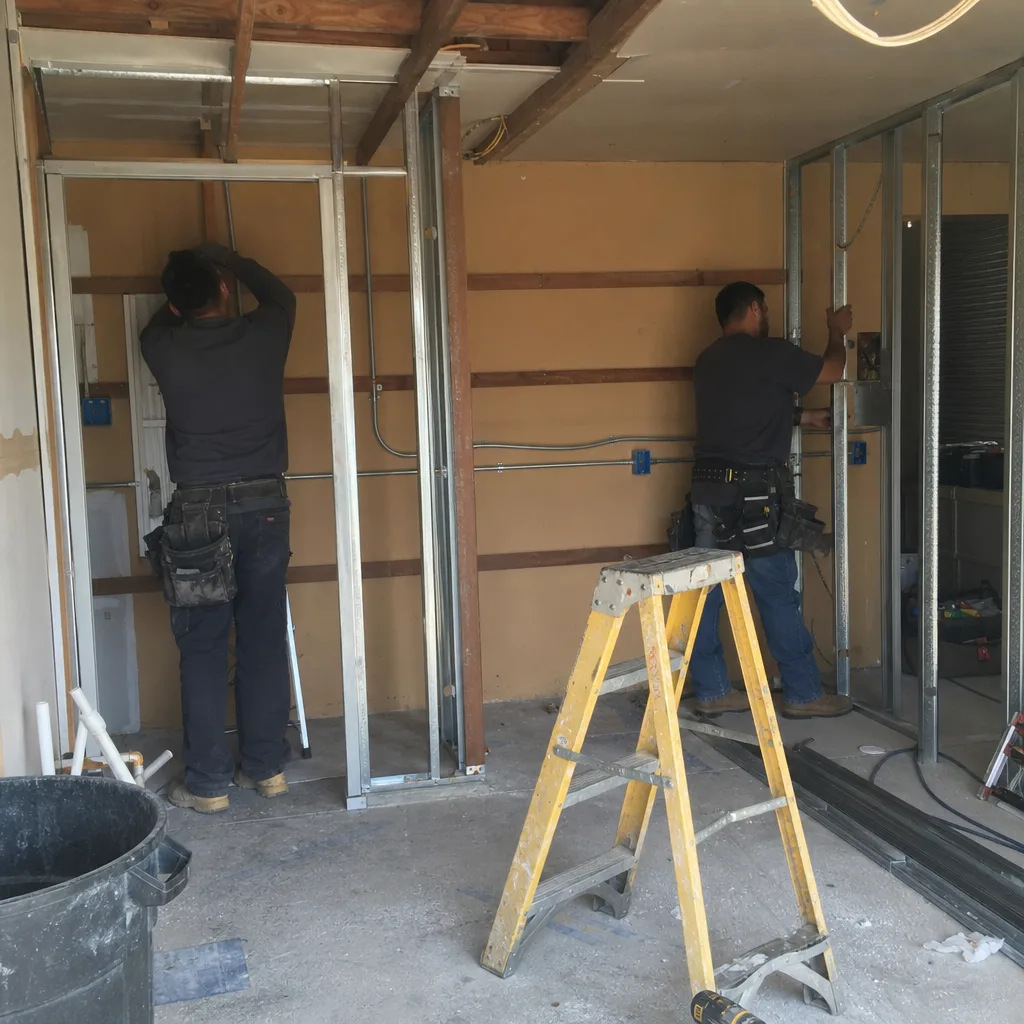
- Waiting for visible damage. By the time you see a water stain or smell mildew in a Long Beach ADU, the damage typically extends through sheathing, insulation, and framing. The mild climate hides problems until they’re expensive.
- Inspecting only the primary residence. A detached ADU has independent roof, foundation, and utility systems. It needs its own inspection schedule, not an afterthought glance during the main house check.
- Using the wrong filter for wildfire smoke. Standard fiberglass filters don’t capture PM2.5 particles. During smoke events, upgrade to MERV 13 or higher, but confirm your mini-split can handle the airflow restriction - some systems alarm or overheat with high-MERV filters.
- Ignoring June Gloom humidity. Long Beach’s summer marine layer isn’t rain, but it produces condensation in unventilated spaces. Running a dehumidifier in the ADU during persistent marine layer periods prevents moisture accumulation that fall rains would then exploit.
- Documenting with memory, not photos. “I checked it and it was fine” has no value in a warranty dispute or resale negotiation. The photo with date stamp is the evidence that protects your investment.
- Deferring termite inspection to “spring.” By June, subterranean termites in Long Beach have already established feeding patterns. February inspection catches colonies before structural damage accelerates.
- Pressure-washing stucco or siding. High-pressure water drives moisture into wall assemblies and damages weather-resistant barriers. Use low-pressure rinse with appropriate cleaners, or hire a professional who understands ADU envelope systems.
When to Call a Professional
Some conditions exceed homeowner maintenance scope and require professional assessment. Call a licensed contractor or specialist when you find: moisture meter readings above 25% in any location; active termite mud tubes or swarm evidence; roof leaks that persist after gutter cleaning and obvious flashing repair; HVAC refrigerant leaks or compressor failure; foundation cracks that show displacement (one side higher than the other) or that admit water; or any condition that changes rapidly between seasonal checks.
For ADU-specific concerns, ADU Design & Permitting in Long Beach through Ellery ADU Studio includes assessment of existing structures for conversion feasibility, including condition evaluation that identifies maintenance needs before design begins. We also offer a Free Second Opinion on any written estimate already in hand - if another contractor has identified a problem and proposed a solution, we’ll review the scope and pricing against the actual condition we find.
Ellery ADU Studio Long Beach offers free estimates in Long Beach - call (562) 414-4842. A live person answers calls 24/7, and every project is quoted with a written price before any work begins, per Haven Standard Clause 1.
Frequently Asked Questions
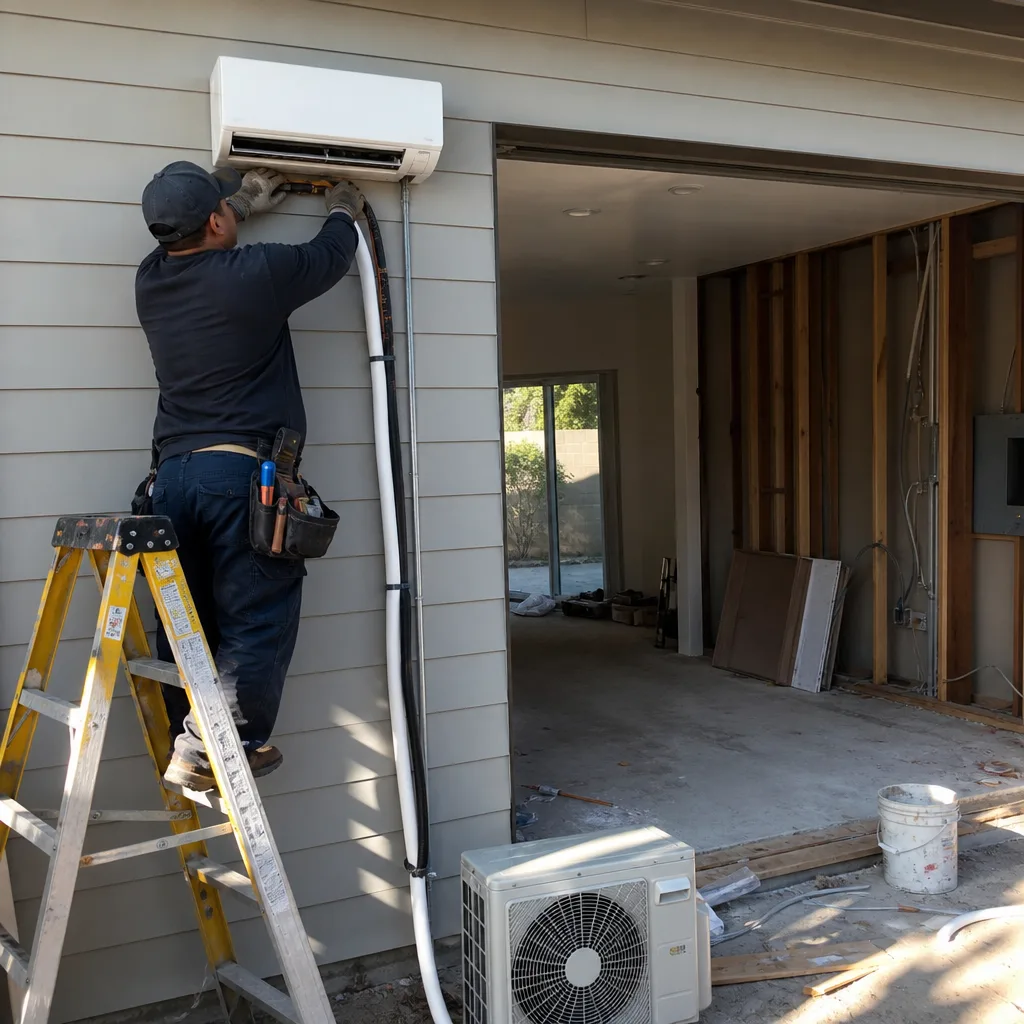
Annual maintenance for a Long Beach ADU typically runs $400-$1,200 if you perform seasonal checks yourself and hire professionals only for the termite inspection and any needed repairs. Professional termite inspection costs $75-$150; HVAC filter maintenance is $40-$80 in materials if you clean reusable filters; and minor sealant or flashing repairs run $200-$500. Deferred maintenance that becomes remediation - rot repair, mold abatement, foundation work - starts at $3,000 and escalates rapidly. Call (562) 414-4842 for an exact assessment of your ADU’s condition - estimates are free.
Under The Haven Standard, Clause 5 (No Surprises), the scope is locked at signing; no door-side upsells, no scope creep. Any condition discovered after work begins that requires additional scope is documented with photos and requires written authorization before proceeding. This applies to our construction projects; for maintenance work, we provide written line-item quotes before scheduling any repair.
A thorough homeowner-performed seasonal inspection takes 90-120 minutes for a typical 400-800 square foot ADU. The fall pre-rain check runs longer if you include gutter cleaning; the winter moisture check is faster if you have baseline readings to compare. Professional termite inspection takes 45-60 minutes for the ADU alone. We recommend blocking a half-day for the fall check, when most corrective work happens.
Routine maintenance - filter replacement, sealant renewal, gutter cleaning, grading adjustment - does not require permits. Repairs that involve structural elements, electrical or plumbing systems, or changes to the building envelope may require permits depending on scope. Long Beach Development Services reviews repairs on a case-by-case basis; we pull permits and pass inspections on all work that requires them, with permit costs included in our written quotes.
Within one mile of the coast, add annual inspection of exterior metal components for corrosion, and consider coated mechanical equipment for replacements. Salt aerosol accelerates degradation of fasteners, flashing, and HVAC components by 30-50% compared to inland Long Beach neighborhoods like Lakewood Village or California Heights. The seasonal schedule remains the same, but the inspection criteria are more stringent.
Keep dated photos of every seasonal inspection, all professional inspection reports (termite, HVAC, roof), receipts for any repairs or replacements, and manufacturer warranties for appliances and equipment. California resale disclosure requires material defect disclosure; comprehensive maintenance documentation demonstrates due diligence and supports higher valuation. Organize records by year, with the original construction documentation and The Haven Standard photo record at the front.
The Bottom Line
Long Beach’s mild climate is not a maintenance exemption - it’s a maintenance deception. The ADUs that preserve value and avoid costly remediation are those where owners treat the calendar as a trigger: October for pre-rain preparation, February for moisture and pest assessment, late May for HVAC readiness, and year-round documentation that creates evidence, not memory. The seasonal approach in this guide addresses Long Beach’s specific risks - concentrated winter rainfall, coastal humidity, wildfire particulates, and subterranean termites - with inspection criteria drawn from our work on 900+ ADU projects since 2015. The cost of systematic maintenance is predictable and modest; the cost of deferred maintenance, discovered at sale or during warranty dispute, is not.
Written by Nadia Ellery, Owner at Ellery ADU Studio Long Beach, serving Long Beach since 2015.