
HOA & Zoning Compliance in Long Beach, CA
HOA and zoning compliance for an ADU in Long Beach means confirming that your project satisfies both the City of Long Beach Development Standards and any recorded CC&Rs governing your property – before a single drawing goes to the building department. At Ellery ADU Studio, ADU Design & Permitting includes this work in every permit set we produce, not invoiced as a separate consulting layer. If you’re at the point where you have a site, a budget, and a neighbor’s cautionary tale about a permit rejection, call us at (562) 414-4842 – a live person picks up, and we’ll tell you on the first call whether your parcel and HOA have any known constraints.
This page covers what HOA and zoning compliance actually involves in Long Beach, the specific scenarios where it becomes the difference between a project that gets built and one that stalls, and how we price it as part of our ADU Design & Permitting in Long Beach scope. Every number on this page is paired with a written quote before any work begins – that’s Haven Standard, Clause 1, and it’s non-negotiable on our end.
When You Need HOA & Zoning Compliance
Not every Long Beach property has an HOA, but most of the city’s zoning constraints apply regardless. Here are the specific situations where compliance review becomes the first thing on the list, not an afterthought:
- Your property falls within an HOA-governed community. Areas like The Greens, Bixby Knolls’s planned tracts, and portions of Belmont Shore have recorded CC&Rs that can restrict ADU exterior finishes, rooflines, or unit placement even when California state law technically preempts outright ADU bans. The preemption is real, but the CC&R language still needs to be read and, in some cases, negotiated.
- You received a zoning flag during a preliminary title search. Some Long Beach parcels in the First Street corridor and parts of Wrigley carry recorded easements or deed restrictions that affect buildable area. A zoning compliance review maps exactly how much of your lot is actually available before you commission drawings.
- Your lot is narrower than 25 feet or sits on a corner. Long Beach’s rear setback rules shift on corner lots, and side-street setbacks can cut into a detached ADU footprint more than owners expect. In neighborhoods like Rose Park and Los Cerritos, we regularly see planned ADU footprints shrink by 60 to 80 square feet once the correct setback envelope is applied.
- You’re converting a garage in a historic overlay district. Portions of the Willmore City Historic District and Carroll Park have design review requirements layered on top of standard zoning. A garage conversion ADU in those areas may require exterior materials approval – James Hardie fiber cement siding, for example, is frequently specified because it matches the lap-siding profiles the design review board expects.
- A prefab or modular unit is part of your plan. Abodu and Plant Prefab, two systems we specify and coordinate, each have standard footprint and height profiles. Confirming those dimensions clear Long Beach’s height limits (typically 16 feet for detached ADUs in single-family zones) and your HOA’s aesthetic guidelines before ordering saves eight to twelve weeks of redesign.
- You already have a written estimate from another firm and something felt off. We offer a Free Second Opinion on any written estimate. In practice, the most common issue we find is that HOA coordination wasn’t scoped at all – the other firm planned to hand that task back to the homeowner mid-project.
Our HOA & Zoning Compliance Process
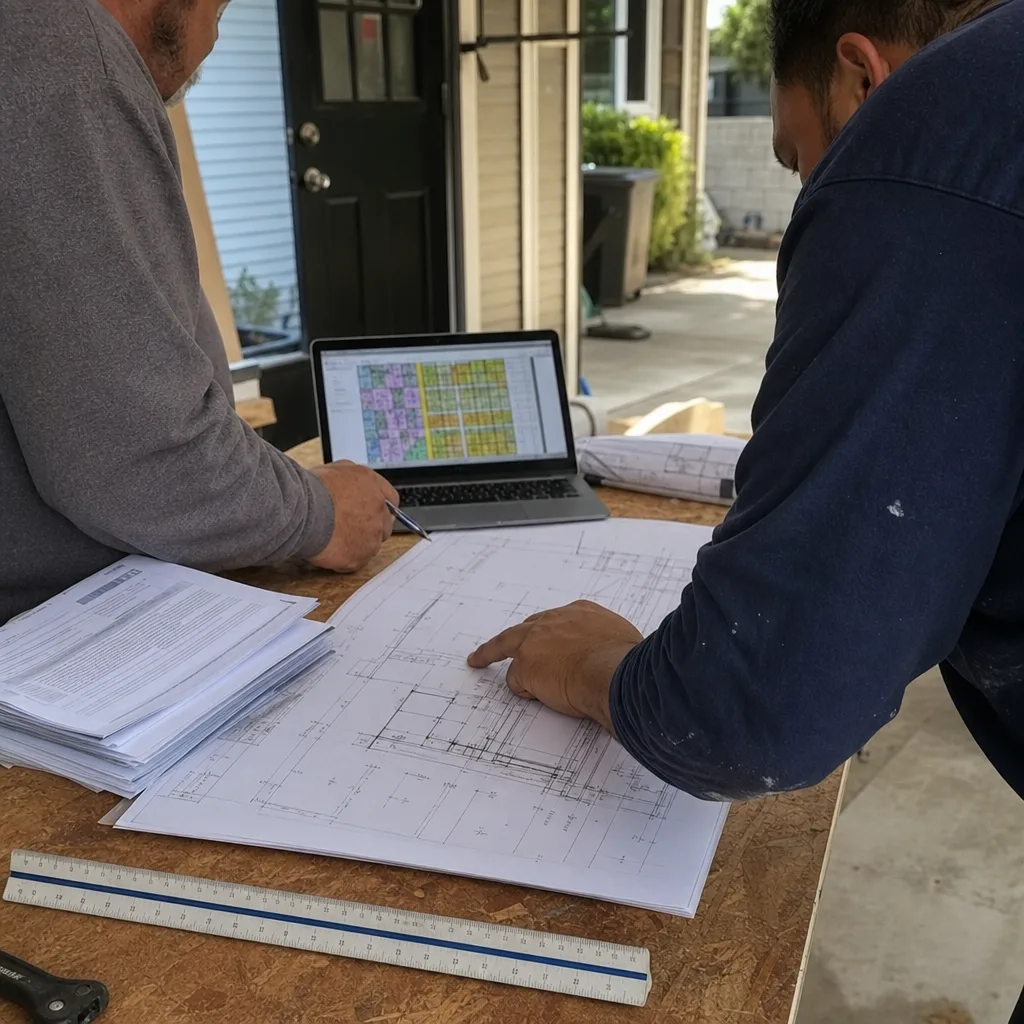
This is how the work actually moves, in the order it happens. Nothing here is delegated to a third-party consultant you’ll need to separately coordinate.
-
Parcel and CC&R Document Review
We begin with Site Assessment, pulling the current assessor parcel data, the recorded CC&Rs (if any), and the Long Beach zoning map classification for your address. This is not a cursory lot-line check. We’re reading the actual CC&R language clause by clause to identify any ADU-specific restrictions, aesthetic approval requirements, or fence and screening mandates that affect the design envelope. In Long Beach, parcels east of Redondo Avenue in the 4th Council District sometimes carry pre-1990 CC&Rs that include language that appears to restrict ADUs but is preempted under AB 2221 – we flag those and document exactly why they don’t apply, so the HOA’s response to your submittal has a clear legal grounding to work from.
-
Zoning Envelope Calculation
Using Long Beach Municipal Code Title 21, we calculate the precise buildable envelope for your ADU: rear setback (typically 4 feet for detached ADUs, but variable near alleys), side setbacks, maximum height, lot coverage cap, and any fire-access clearance requirements, including Title 24 Energy Compliance factors that affect the design. We plot this on a dimensioned site plan so you can see – in feet and inches, not approximations – how large your ADU can actually be. This drawing becomes part of the permit set, and it’s part of the documented photo record you receive at the close of each milestone.
-
HOA Pre-Submittal Package Preparation
If your HOA requires architectural committee approval, we prepare the submittal package the committee expects: site plan, exterior elevations, material callouts, and a written compliance memo citing the California Civil Code sections (4751 and 4600.1) that govern HOA authority over ADUs. We’ve found that HOAs in Long Beach respond faster when the package frames the state law context up front – it reduces back-and-forth by removing ambiguity about what the HOA can and cannot require.
-
HOA Review Coordination and Response
We manage the HOA review period directly. If the architectural committee comes back with conditions – a specific paint color, a fence height, a screening requirement – we evaluate whether each condition is enforceable under current California law or whether it conflicts with state ADU preemption. Conditions that are legally valid and design-compatible get incorporated into the drawings. Conditions that conflict with state law get a written response from our side, citing the applicable statute. You don’t field HOA emails during this phase; we do.
-
City of Long Beach Planning and Building Coordination
With the zoning envelope confirmed and HOA approval (or documented preemption) in hand, we file the Permit Application with the City of Long Beach Building and Safety Bureau. Long Beach uses an electronic plan check system, and the ADU-specific review pathway has tightened since 2023 – plans that don’t address setback documentation and lot coverage in the first submittal typically receive a correction notice that adds four to six weeks. Our permit sets are structured to address those points in the initial submittal, which is why our first-pass correction rate is lower than the city average for ADU projects.
-
Written Scope Lock and Project Handoff
Once the permit is issued, the compliance scope is closed and the construction scope is locked in writing per Haven Standard, Clause 5. The written price you received before any work started covers everything in the permit set – no door-side additions, no scope creep triggered by HOA conditions we encounter mid-process. If something changes at the HOA or city level after signing, we document it in writing before any cost adjustment is discussed.
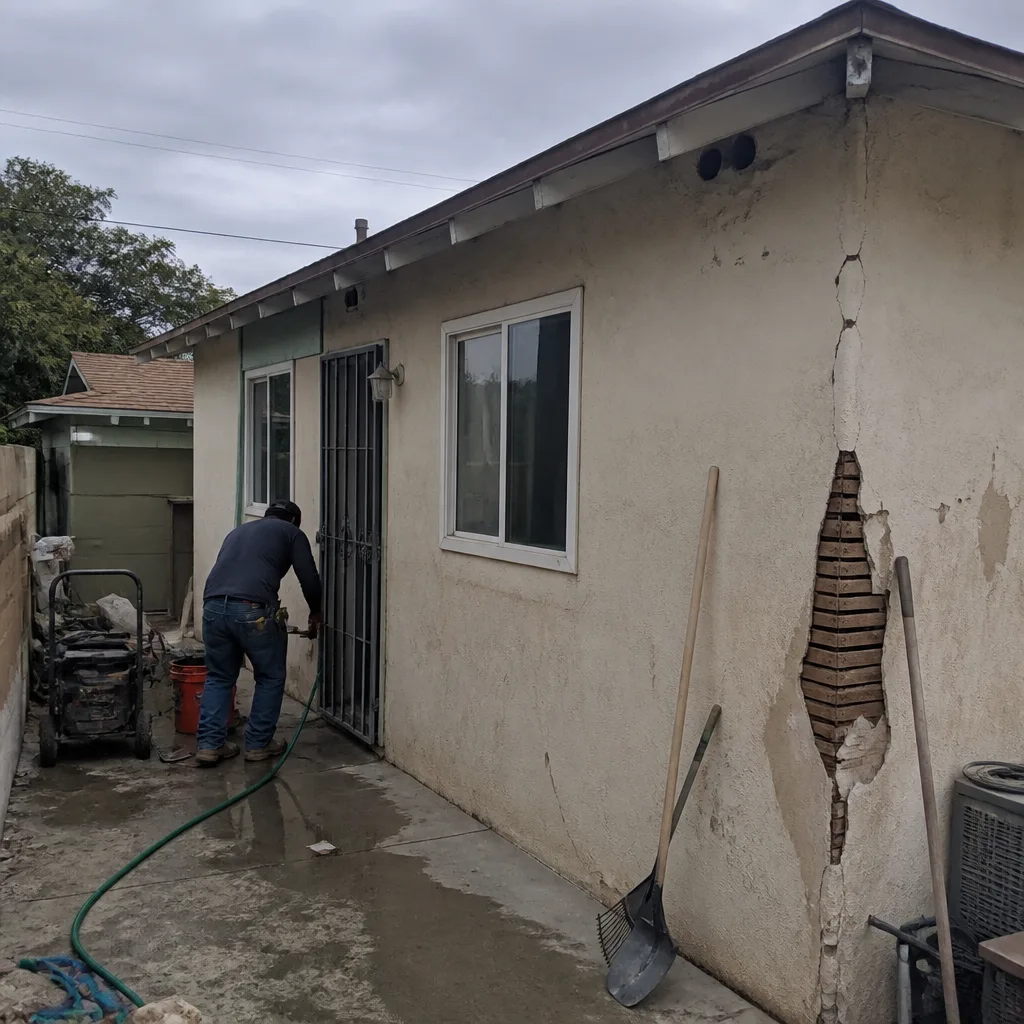 Before
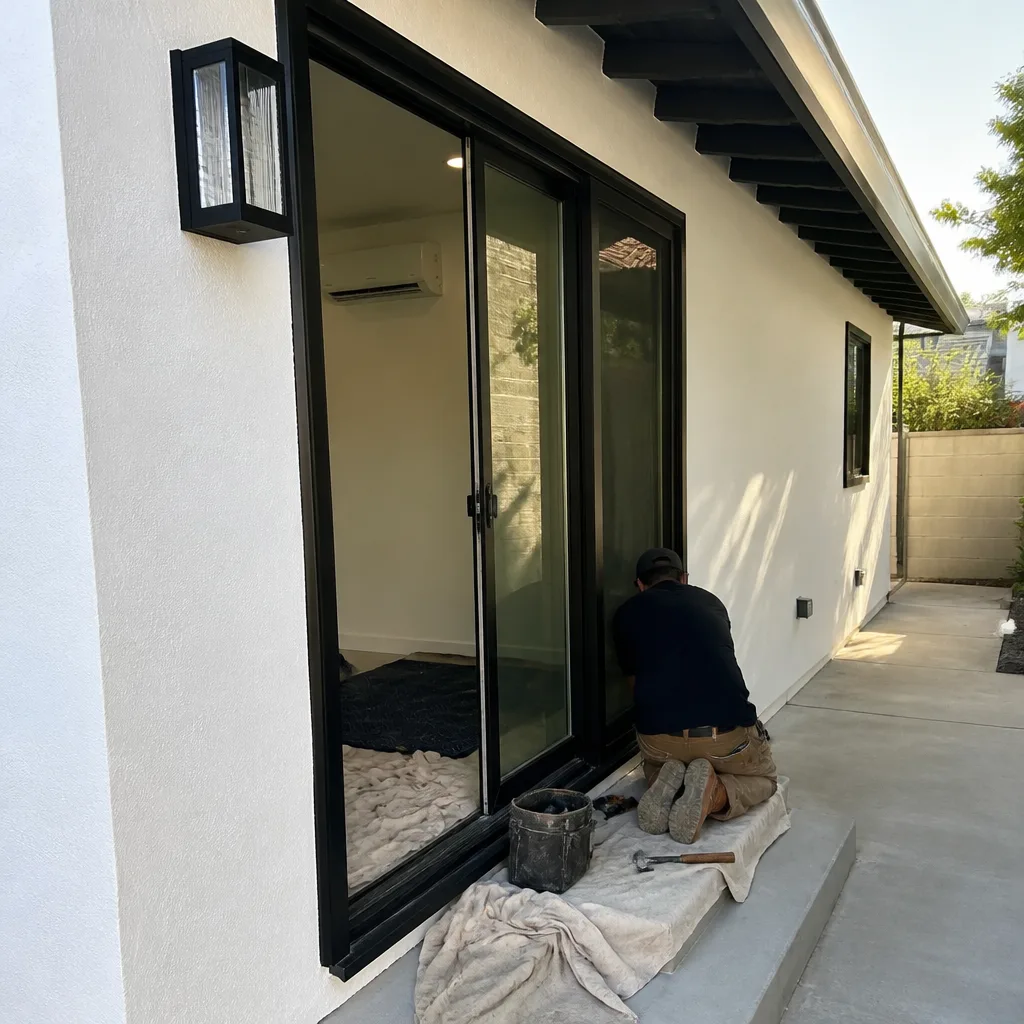 After
AfterHOA & Zoning Compliance Pricing in Long Beach
HOA and zoning compliance is not a standalone service at Ellery ADU Studio – it’s included in the design and permitting scope of every project we take on in Long Beach. That said, the work involved varies enough by project type that it’s worth being specific about what drives cost differences.
| Compliance Scenario | Typical Added Scope vs. Standard Permit Set | Approximate Cost Implication |
|---|---|---|
| No HOA, straightforward R1 zoning | Zoning envelope calc included in base permit set | $0 above base permit set pricing |
| HOA with standard architectural review | CC&R review, pre-submittal package, one round of HOA coordination | $800 – $1,400 in added design time, included in written quote |
| HOA with contested conditions or preemption response | Legal memo drafting, two or more HOA coordination rounds | $1,400 – $2,800 in added scope, documented in writing before work begins |
| Historic overlay district (e.g., Willmore City, Carroll Park) | Design review board submittal, exterior materials compliance documentation | $1,200 – $2,200, included in written project quote |
| Setback variance application (non-standard lot) | Variance package, City of Long Beach Planning Commission coordination | $2,000 – $4,500 depending on variance complexity |
These ranges reflect real Long Beach project data from the 900+ ADUs we’ve designed, permitted, and built since 2015. The numbers are not estimates plucked from a national average – they reflect what HOA coordination actually costs in this city’s specific permitting environment.
Every project receives a written price before any work starts, per Haven Standard Clause 1. If your project has characteristics that push toward the higher end of a range above – a particularly active HOA architectural committee, a non-standard lot in Belmont Heights, a contested historic overlay – that gets documented in the scope and priced in the quote, not discovered mid-project. Call (562) 414-4842 and we’ll tell you which scenario your property falls into before you commit to anything.
Key Takeaways
- HOA and zoning compliance in Long Beach is included in Ellery’s design and permitting scope – not billed as a separate consulting engagement after the drawings are done.
- California Civil Code sections 4751 and 4600.1 limit HOA authority over ADUs significantly, but CC&R language still needs to be read and addressed in writing – not ignored.
- Long Beach’s zoning code creates real variation between neighborhoods: Rose Park, Belmont Shore, and the Willmore City Historic District each have constraints that don’t appear in a basic parcel lookup.
- Every price quoted is written and locked before work starts, under Haven Standard Clause 1. No adjustments without written documentation first.
- If you have a written estimate from another firm that didn’t scope HOA coordination, bring it to us for a Free Second Opinion before signing anything.
FAQs – HOA & Zoning Compliance in Long Beach
Can my HOA legally block my ADU in Long Beach?
No – California Civil Code Section 4751, amended under AB 2221 (effective January 2023), prohibits HOAs from using CC&Rs to effectively ban ADUs on lots zoned for single-family or multifamily use. What HOAs can still do is impose reasonable design standards: exterior finishes, paint colors, roofline height, and similar aesthetic conditions are generally enforceable as long as they don’t make the ADU unreasonably expensive or infeasible. In Long Beach, we’ve seen HOA committees in communities near Bixby Knolls and The Greens attempt to impose conditions that crossed that line – in each case, a written response citing the specific statute resolved the issue without litigation. The key is knowing which HOA conditions to accept, which to push back on, and how to document both. Call (562) 414-4842 if your HOA has already sent you a letter – we can tell you in plain terms what they’re legally permitted to require.
How long does HOA review typically take in Long Beach?
Most HOA architectural committees in Long Beach operate on a 30 to 45 day review cycle, though some smaller HOAs governed by volunteer boards can run 60 days or longer. Under California Civil Code Section 4600.1, an HOA that fails to act within a specified timeframe can be deemed to have approved the request – the exact window depends on the CC&Rs. We track the review clock on every project and send follow-up correspondence at the two-week mark if no acknowledgment has been received. For projects where HOA approval is on the critical path to city permit submittal, we start the HOA process early in the design phase rather than waiting for completed drawings – that sequencing typically saves three to five weeks on overall project timeline.
What’s the difference between HOA compliance and city zoning compliance?
HOA compliance governs whether your private association will approve the project under the CC&Rs recorded against your property. City zoning compliance governs whether your project meets Long Beach Municipal Code Title 21 – setbacks, height limits, lot coverage, parking requirements, and land use. Both must be satisfied, but they’re evaluated by different parties and on different timelines. The city doesn’t care what your HOA approved; the HOA doesn’t control what the city permits. A project can get city approval and HOA rejection, or vice versa. Our permit sets address both simultaneously: the zoning envelope and setback documentation satisfy the city’s plan check reviewers, while the HOA pre-submittal package addresses the architectural committee’s separate requirements. That parallel process is part of what Ellery ADU Studio offers under a single contract – you’re not coordinating two separate professionals across two separate timelines.
What does Ellery’s written quote actually cover for HOA and zoning compliance?
The written quote you receive before any work begins, under Haven Standard Clause 1, covers the full scope documented in your project agreement: CC&R review, zoning envelope calculation, HOA pre-submittal package preparation, one standard HOA coordination cycle, and all city zoning documentation required for the permit set. If your project involves contested HOA conditions, a setback variance, or historic district design review, those are identified during the initial parcel review and scoped in the written quote before you commit. Nothing in the compliance scope is left as a time-and-materials line that can expand without your written sign-off first. For a clear picture of where your specific property sits, call (562) 414-4842 – the initial conversation costs you nothing, and you’ll leave it knowing which compliance scenario applies to your address.
Written by Nadia Ellery, Owner at Ellery ADU Studio Long Beach, serving Long Beach since 2015.