
James Hardie Site Prep & Utilities: The Long Beach Owner’s Guide
James Hardie site prep and utilities installation in Long Beach typically runs $8,500-$18,500 for a standard ADU pad and utility rough-in, depending on soil conditions, existing electrical service capacity, and whether we’re tying into city sewer or installing a septic alternative. We stock James Hardie-compatible moisture barriers, galvanized fasteners rated for coastal salt air, and utility rough-in kits on every Long Beach crew truck. Most homeowners discover something’s off when their general contractor’s quote suddenly balloons for “unforeseen site conditions” that a proper prep phase should have caught.
The permit either approves or it doesn’t. Let’s talk about what makes the difference.
Which James Hardie Models This Applies To
James Hardie’s siding and trim systems - HardiePlank lap siding, HardiePanel vertical siding, HardieShingle, and HardieTrim boards - don’t fail in isolation. The failure almost always traces back to site prep and utilities: inadequate drainage plane beneath the cladding, improperly flashed utility penetrations, or fasteners that corrode in Long Beach’s marine layer within eight to twelve years instead of lasting the full product warranty.
We specify James Hardie products for both stick-built and prefab ADU installations across our Long Beach projects. The critical compatibility point is the 0.42-inch thickness of standard HardiePlank versus the 5/16-inch HardiePanel - each requires different fastening patterns and, more importantly, different moisture management behind the board. OEM James Hardie fasteners are collated 304 stainless with a ring shank; the aftermarket equivalent we stock is the Simpson Strong-Tie SDWS Timber screw in 316 stainless for coastal zones. The 316 grade costs roughly 15% more but we’ve never seen one fail at the Wrigley neighborhood conversions where salt air sits heaviest. Check your existing fasteners with a magnet - 300-series stainless is non-magnetic; if it sticks, you’ve got carbon steel failing in real time.
Signs Your James Hardie Site Prep & Utilities Is Failing
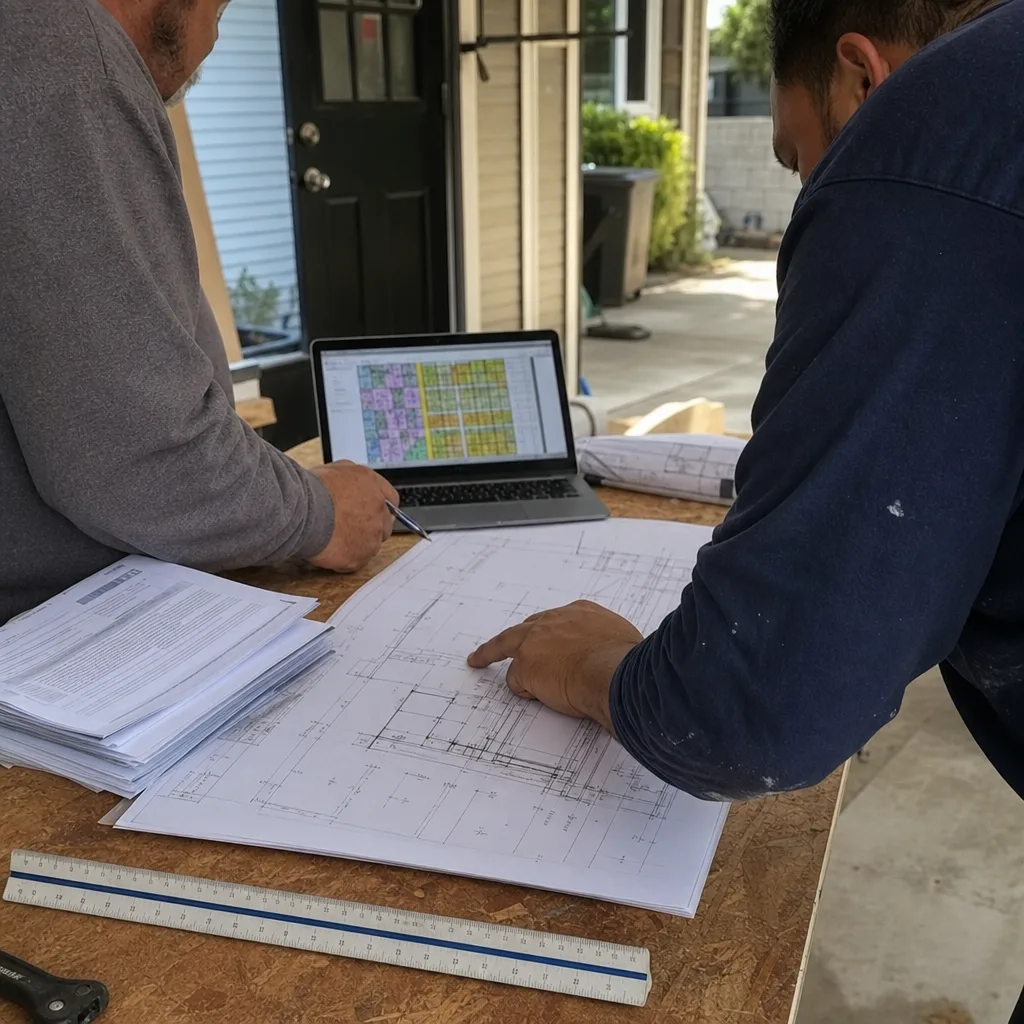
- Soft or discolored siding near hose bibs, electrical meters, or gas risers. This means the utility penetration flashing was either omitted or installed without a proper drainage plane. James Hardie’s installation manual calls for a minimum 4-inch head lap on horizontal flashing; we’ve found Long Beach retrofits where the previous crew used 2 inches because they didn’t account for our driving winter rains.
- Fastener heads bleeding rust streaks down the plank face. Carbon steel fasteners in coastal Long Beach begin oxidizing within 18 months. The streaks are cosmetic at first, then structural as the fastener loses grip and the board loosens, allowing wind-driven rain behind the cladding.
- Efflorescence or white powder on the foundation wall below the siding. This signals water migrating through the drainage mat because the site grade was improperly prepared - either no compacted base, or a slope directing water toward the structure instead of away. In the Belmont Shore area, we’ve seen this where old fill soil settled unevenly after original construction.
- Utility shutoffs that trip during moderate weather. If your electrical panel, gas meter, or water main is located on the ADU exterior and the enclosure wasn’t built to James Hardie’s clearance specifications, thermal expansion of the siding can compress conduit or flex lines. The HardieTrim board around utility enclosures needs a 1/8-inch gap at all corners; without it, something gives.
- Board edges swelling or delaminating within 5 years of installation. James Hardie fiber cement is dimensionally stable when kept dry. Edge swelling means bulk water is reaching the board - almost always a site prep failure, not a product defect. The warranty doesn’t cover improper installation.
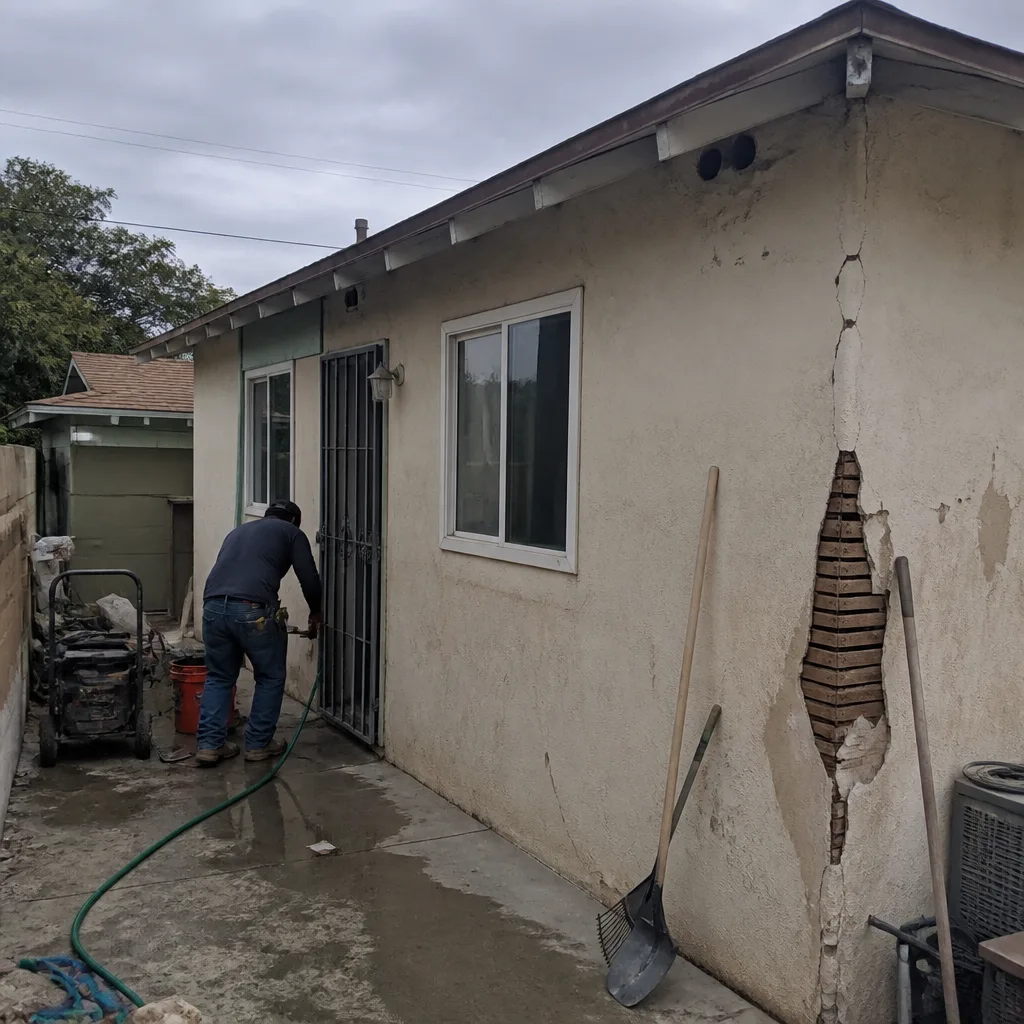 Before
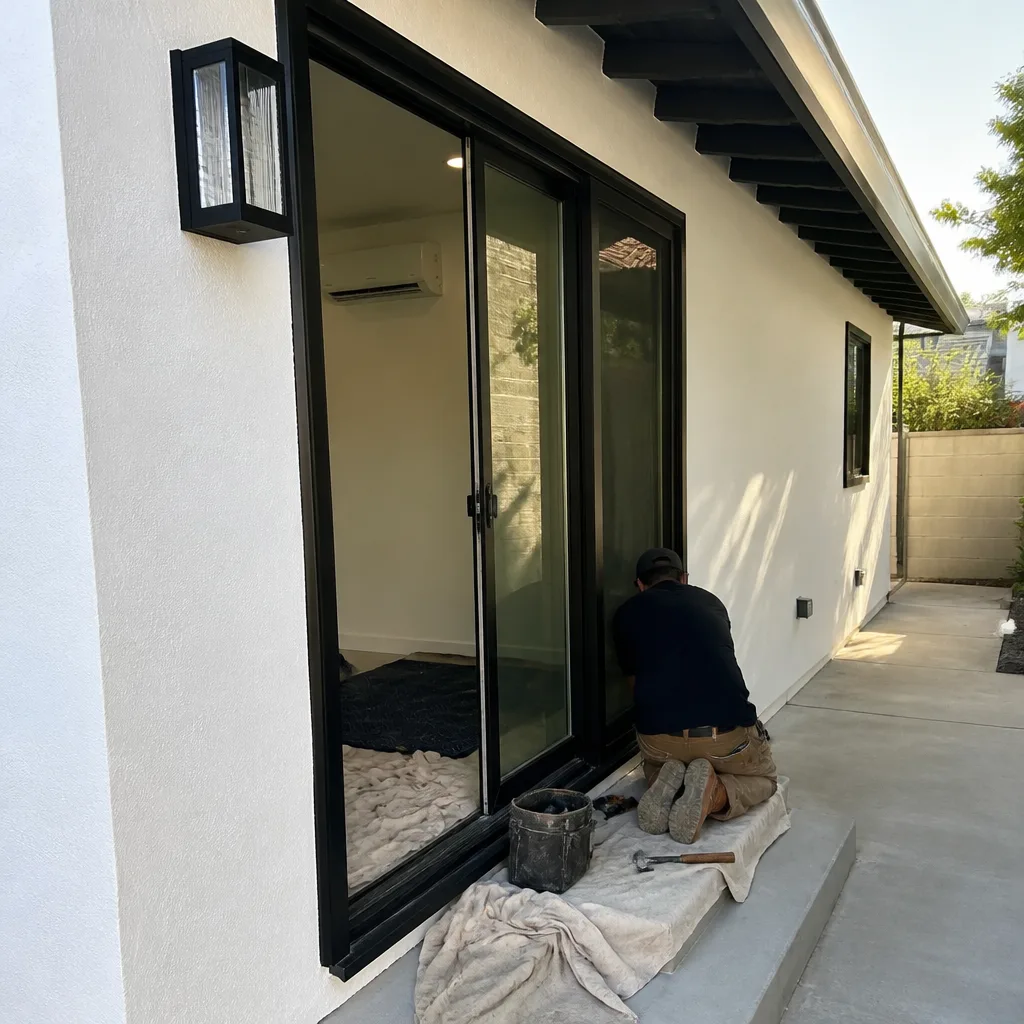 After
AfterReplacement Cost & What’s Included
For Long Beach ADU projects, James Hardie site prep and utilities correction typically breaks down as follows:
| Line Item | Typical Range |
|---|---|
| Site evaluation & moisture probe testing | $450-$750 |
| Drainage plane / weather-resistant barrier replacement | $2,800-$5,200 |
| Fastener replacement (coastal grade, full structure) | $1,800-$3,400 |
| Utility penetration reflash & enclosure rebuild | $2,200-$4,800 |
| Grade correction & compacted base restoration | $1,200-$4,300 |
Under Haven Standard Clause 1, every project receives a written price before any work starts - no “call for a quote,” no range that widens once we’re on site. The total above lands between $8,500 and $18,500 for most Long Beach ADU sites we’ve worked, with the variance driven almost entirely by how many utility penetrations need reworking and whether we discover non-compliant original work that requires permit amendment. Our 365-Day Done Right Promise covers the full scope: if the drainage plane doesn’t perform as specified, we return and correct it at no charge.
DIY or Call Us?
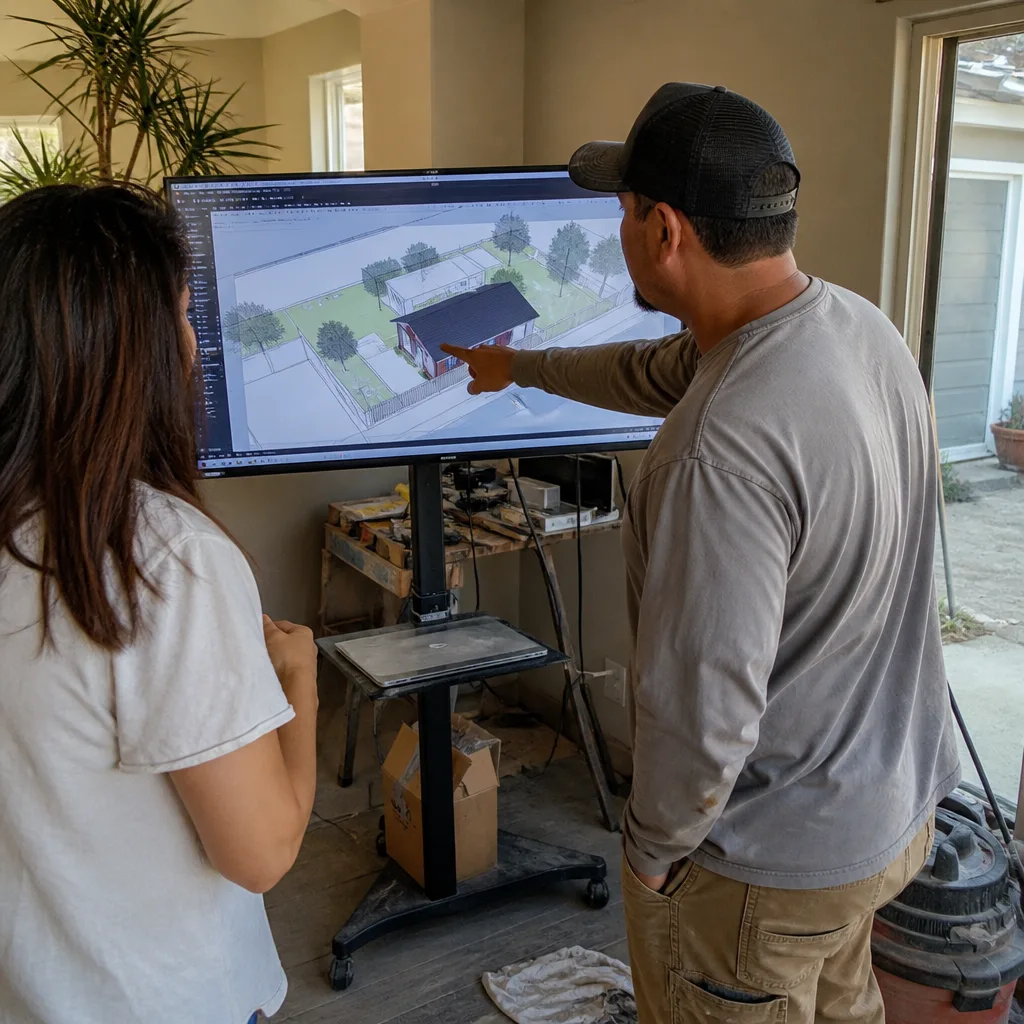
There’s a safe middle ground here. A homeowner can walk the perimeter with a magnet to test fastener grade, photograph suspicious rust streaks, and check that utility enclosures have visible gaps at corners. What you cannot safely do: remove cladding to inspect the drainage plane without knowing whether live electrical runs through that wall cavity, or attempt to reflash a gas meter enclosure without verifying line pressure is locked out. We’ve been called to Long Beach jobs where a well-meaning owner compromised the weather barrier and created a mold condition that cost three times the original repair to remediate.
We also specify and coordinate prefab and modular systems from Abodu, Cover, and Dvele - but James Hardie remains our most specified cladding for stick-built ADUs in this market because of its fire rating and the 30-year product warranty. Ellery ADU Studio Long Beach is an independent design-build studio, not affiliated with James Hardie.
If you’re seeing the symptoms above, call (562) 414-4842 to schedule your free estimate. We’ll bring the moisture probe, the magnet, and a written scope you can compare against any other bid.
FAQs
Properly installed with coastal-grade fasteners and a compliant drainage plane, the prep layer should last 25-30 years - the full product warranty period. We’ve found original installations in Long Beach failing at 8-12 years where carbon steel fasteners or missing head laps were used. Call (562) 414-4842 for an exact quote - estimates are free.
Localized repair is possible if the failure is isolated to one utility penetration or a single wall face. We don’t recommend partial drainage plane replacement on the same elevation - the seam between old and new barrier becomes the next failure point. Our documented photo record shows you exactly which areas are salvageable and which aren’t before you commit. Call (562) 414-4842 for an exact quote - estimates are free.
Most Long Beach ADU sites require 4-6 working days for full correction, assuming no permit amendment is needed. If we discover non-compliant original work that requires a permit revision - common in pre-2020 garage conversions - add 10-15 business days for city processing. We pull all permits and schedule inspections as part of the single contract.
Yes. Every crew truck carries 316 stainless fasteners, HardieWrap weather barrier, Flashing Bendable trim, and utility penetration kits sized for standard electrical, gas, and water configurations. For unusual penetrations - solar conduit, EV charging runs, or ADU-specific greywater lines - we fabricate custom flashings in our shop and typically have them on site within 48 hours.
Written by Nadia Ellery, Owner, Ellery ADU Studio Long Beach at Ellery ADU Studio Long Beach, serving Long Beach and nearby areas.