
James Hardie Garage Conversion ADU: The Long Beach Owner’s Guide
James Hardie fiber-cement siding and trim systems installed in garage conversion ADUs across Long Beach typically run $18,000-$34,000 all-in for a standard 400-square-foot structure, including the HardieZone 10-compatible product line specified for our coastal climate, drawings through final inspection. We stock James Hardie HZ10 boards, HardieTrim NT3, and the specialized fastening pattern required for fire-rated garage separation walls. Most Long Beach garage conversions we see were built between 2018 and 2023 with HardiePlank Lap Siding in 8.25-inch exposure; the failure point is almost always moisture intrusion at the horizontal seam above the garage door header, where the original installer missed the Z-flashing detail.
Which James Hardie Models This Applies To
Long Beach garage conversion ADUs most commonly use the HardieZone 10 (HZ10) product line, specifically engineered for marine exposure and the salt-laden air we get within three miles of the coast. The HZ10 designation matters: standard HZ5 products sold at big-box stores inland will delaminate prematurely here. You’ll find the zone stamp on the back of each board, along with a run date and plant code.
The specific profiles we match and stock for repair and replacement:
- HardiePlank Lap Siding, 8.25-inch exposure, 12-foot lengths - the dominant profile in Wrigley, Belmont Heights, and Bixby Knolls conversions
- HardiePanel Vertical Siding, 4×8 and 4×10 sheets - used on modernist detached ADUs in Alamitos Heights where the garage faced an alley
- HardieTrim NT3 boards and bands - the non-tapered trim that frames windows and doors; NT3 replaced the older NT2 in 2019, and the two are not interchangeable at corner joints
- HardieShingle staggered-edge panels - occasional use on Craftsman-style conversions in Bluff Park where the garage was visually subordinate to the main house
OEM James Hardie parts ship with the proprietary ColorPlus finish baked on at the factory; aftermarket color-matched primed boards exist but require field painting that voids the 30-year substrate warranty if the topcoat specification is off. We specify OEM for any repair larger than two boards, and we keep the six most common ColorPlus colors in Long Beach on our truck: Arctic White, Sail Cloth, Cobble Stone, Monterey Taupe, Iron Gray, and Evening Blue.
One compatibility gotcha: the 2018-2020 HardiePlank production run from the Fontana plant had a slightly different nail-line embossment depth. If you’re patching into that era, the new board sits proud by about 1/32 inch. We plane the replacement edge or source NOS from our salvage network rather than tell you to live with the shadow line.
Signs Your James Hardie Garage Conversion ADU Is Failing
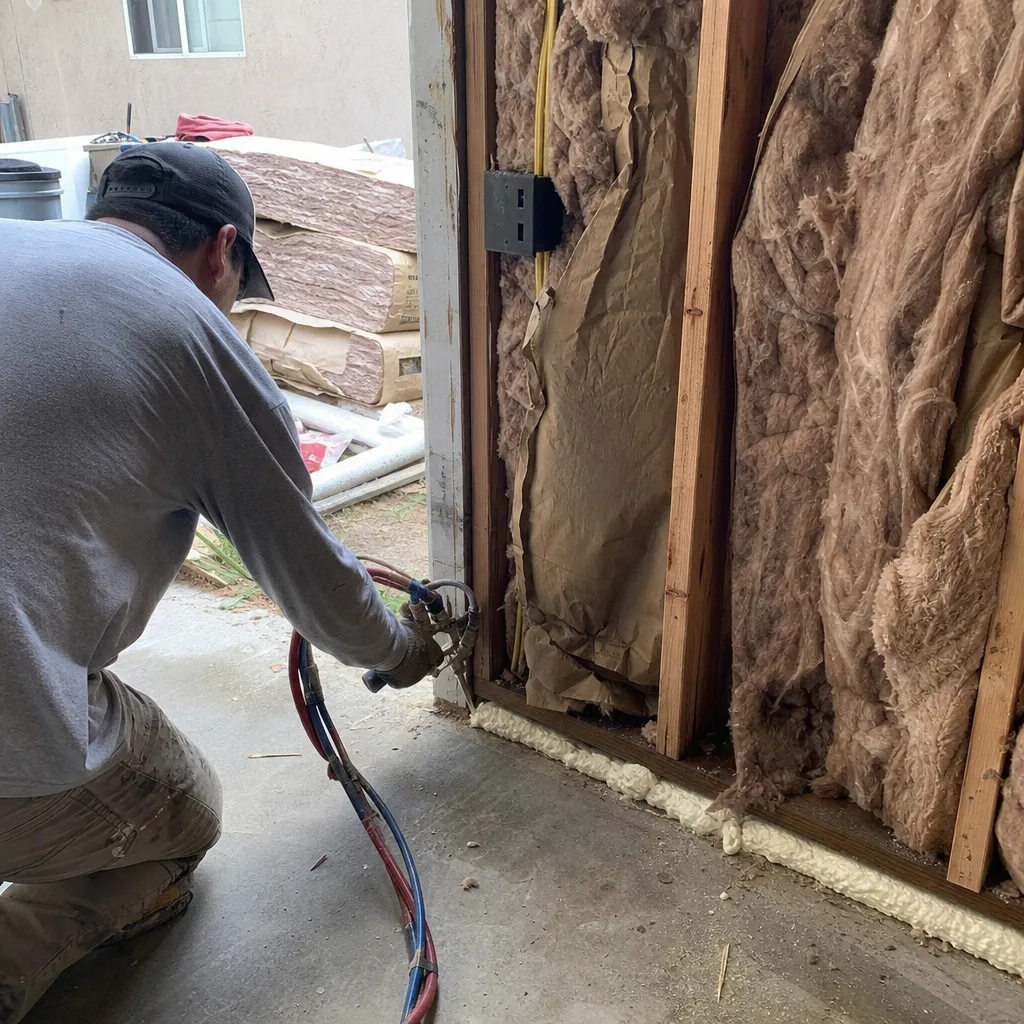
- Softening at the bottom course, especially behind planter beds. Hardie board is fiber-cement, not concrete; wicking from irrigation overspray saturates the lower edge, and the embedded cellulose fibers begin to expand. In Long Beach, we see this most on north-facing garage doors where the afternoon sun never reaches to dry the board.
- Cracking in a stair-step pattern from window corners. This is thermal movement stress, not impact damage. The garage conversion ADU lacks the thermal mass of the main house; daily expansion-contraction cycles concentrate at the rigid HardieTrim corner blocks if the installer omitted the specified 3/16-inch gap and caulk joint.
- Paint bubbling on ColorPlus boards within five years. Factory-finished ColorPlus carries a 15-year finish warranty, but only when installed with the specified corrosion-resistant fasteners and the required 1-inch minimum roofline clearance. We find missing kick-out flashings on at least half the Long Beach conversions we inspect; water runs behind the siding and pushes the finish from the back.
- Nail pops with rust streaks. James Hardie mandates stainless steel or hot-dipped galvanized fasteners; the electro-galvanized screws many subs used during the 2019-2021 ADU boom corrode in our salt air in four to six years. The rust stain is cosmetic; the structural concern is whether the board is still fully secured against wind uplift per L.A. County’s 110 mph design requirement.
- Visible gap opening at the garage-to-ADU separation wall. This is the critical one. California fire code requires a 1-hour rated assembly between living space and garage; Hardie’s proprietary 5/8-inch HardieBacker cement board with specified taping is part of that assembly. If you see cracking or separation at this joint, the fire rating is compromised and the city inspector will red-tag the unit at resale or refinance.
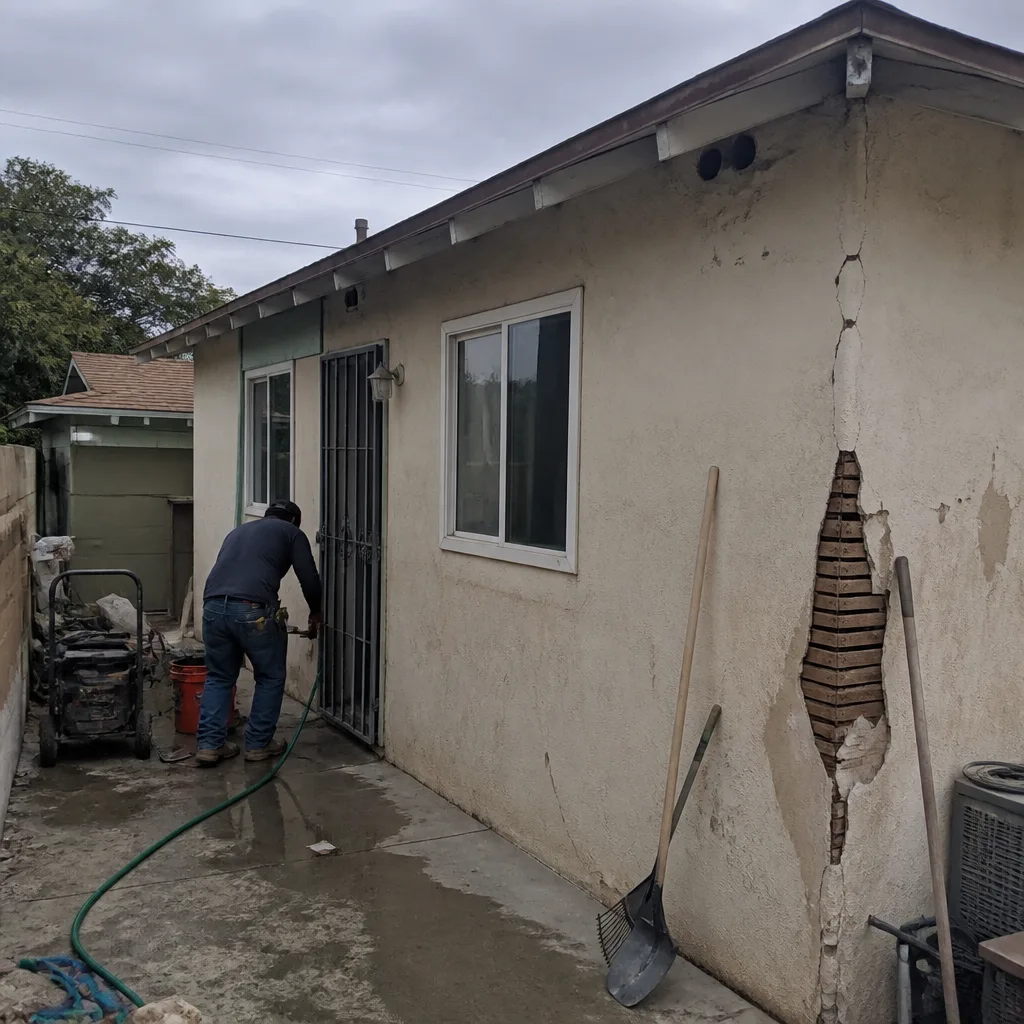 Before
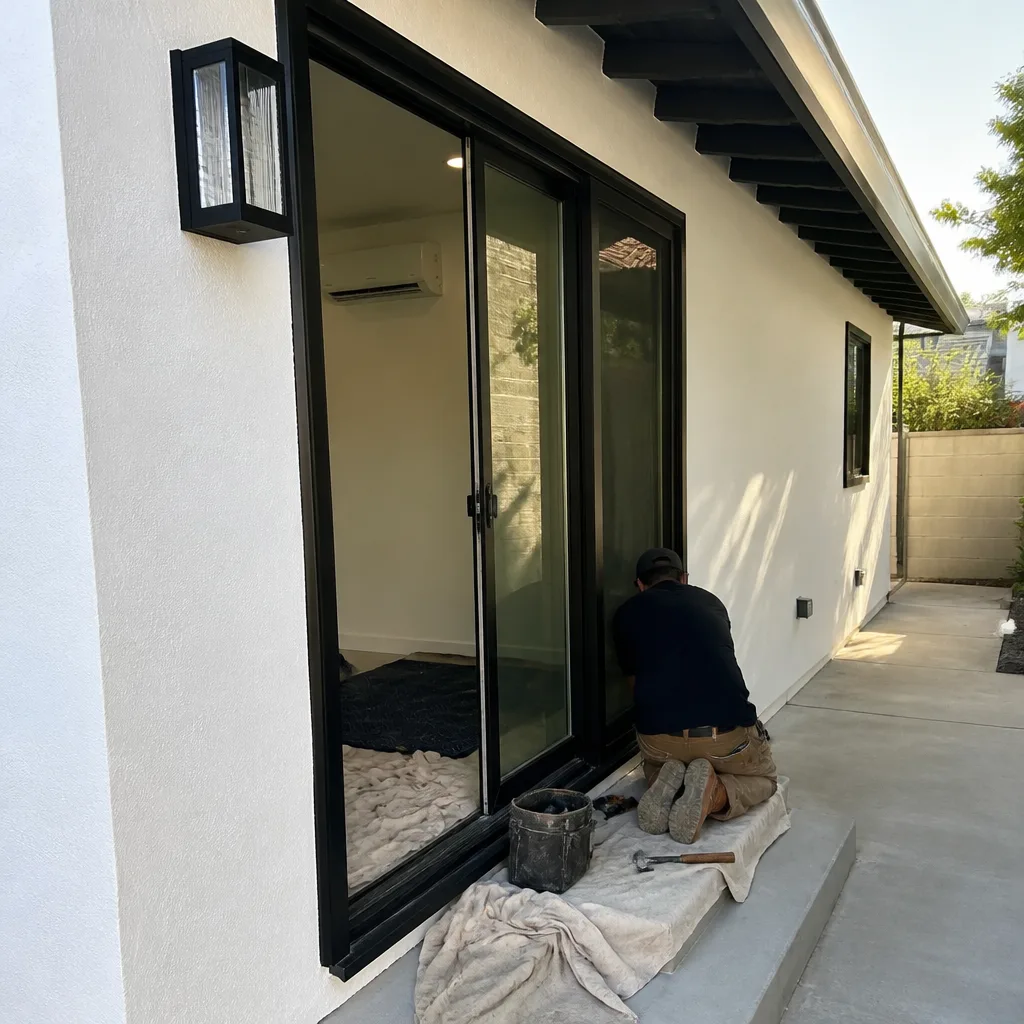 After
AfterReplacement Cost & What’s Included
James Hardie garage conversion ADU siding repair in Long Beach breaks down as follows, with every line item written before work starts under Haven Standard Clause 1:
| Scope | Typical Range |
|---|---|
| Localized repair: 1-4 boards, flashing correction, spot paint match | $2,800-$4,500 |
| Partial re-side: one wall, including trim and window/door re-flash | $7,500-$12,000 |
| Full garage conversion ADU re-side: 400 sq ft, HZ10 product, ColorPlus | $18,000-$34,000 |
| Fire separation wall remediation: HardieBacker, taping, inspection | $4,200-$6,800 additional |
The spread depends on three factors: whether we can source matching ColorPlus from current production (discontinued colors require full-repaint), whether the substrate behind the failed boards is intact (garage conversions often have unsealed OSB that swells), and whether the original permit set included the fire-rated assembly detail we now need to verify. We pull permits on every remediation; Long Beach Building & Safety requires a corrected wall section for any fire-assembly modification.
Our replacement includes the documented photo record on every visit, the 365-Day Done Right Promise backed in writing, and the full permit set revision if the original drawings didn’t match what got built. No change orders once the scope is locked at signing. That’s Haven Standard, Clause 5.
DIY or Call Us?
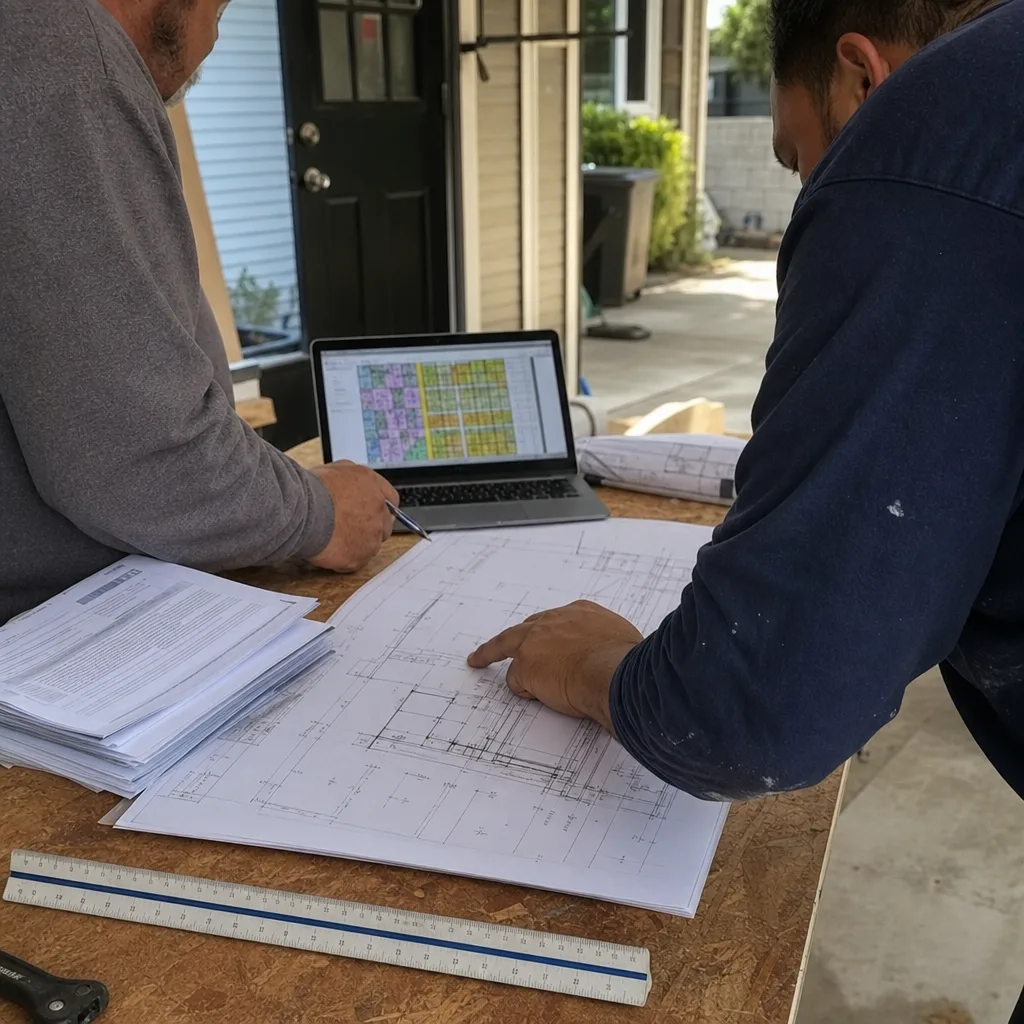
What you can safely check yourself: walk the perimeter with a screwdriver and gently probe any soft spots. Look for the HZ10 stamp on a leftover board in the garage rafters - most Long Beach builders left scraps. Photograph any rust streaks and note which wall faces the Pacific; salt exposure is directional here.
Where DIY goes wrong: cutting fiber-cement without a HEPA vacuum and the correct blade generates respirable silica; OSHA regulates this as a hazardous operation. More critically, the fire separation wall is not a cosmetic repair. If you disturb that assembly without a permit-corrected detail, you risk a Notice of Violation from Long Beach Building & Safety that attaches to the property record and complicates any future sale or refinance. We’ve cleaned up three of these in the past two years, and the remediation cost triples once the city is involved.
We’re not affiliated with James Hardie; we’re an independent design-build studio that specifies and coordinates their systems within our single-contract model, alongside prefab brands including Abodu, Cover, and Dvele. Call (562) 414-4842 to schedule your free estimate. We’ll bring the color samples, the moisture meter, and the original permit research.
FAQs
Properly installed HZ10 product with correct fasteners and flashing should last 30 years or more; we see premature failure at 7-12 years when the installer used inland-spec materials or skipped the Z-flashing. The permit either approves or it doesn’t. Let’s talk about what makes the difference. Call (562) 414-4842 for an exact assessment - estimates are free.
Small cracks in HardieTrim can be filled and painted if the substrate is dry; fiber-cement lap siding, once the face layer is compromised, cannot be patched in a way that restores the moisture barrier. We replace the board. Call (562) 414-4842 for an exact quote - estimates are free.
A localized repair is two to three days; a full re-side runs two to three weeks including permit revision, inspection scheduling, and the required moisture-content verification before paint. Long Beach Building & Safety typically inspects fire-separation work within 48 hours of request. Call (562) 414-4842 for a timeline on your specific scope - estimates are free.
We stock HZ10 boards in the six most common ColorPlus colors, HardieTrim NT3 in 4/4 and 5/4 dimensions, and the correct corrosion-resistant fasteners for our zip code. Non-stocked colors or the older NT2 profile require a factory order with a four-to-six-week lead time; we’ll tell you before you sign which path your project requires. Call (562) 414-4842 to confirm availability for your color match - estimates are free.
Written by Nadia Ellery, Owner, Ellery ADU Studio Long Beach at Ellery ADU Studio Long Beach, serving Long Beach and nearby areas.